Decorative Patterns
Class L · Plates XXIX–XL

The Spiral

Twelve consecutive plates. Whorls, S-curves, trumpet ends, spurred Maltese forms. The largest single class in the book by a wide margin.

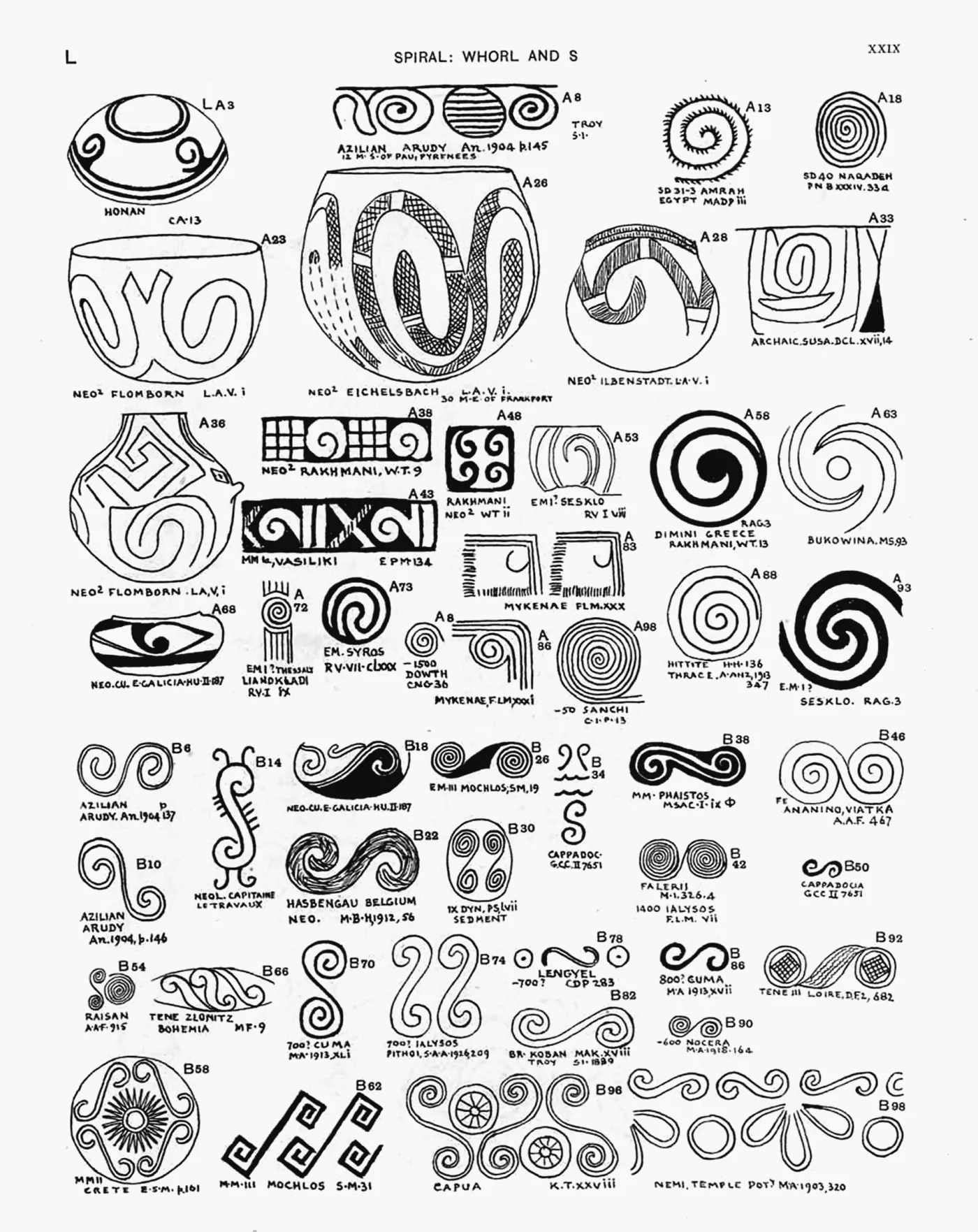
Plate XXIX — Spiral: Whorl and S Zoom
Plate XXIX · Class L

Spiral: Whorl and S

Petrie starts the spiral at its root. The Azilian pieces from the Pyrenees, LA 8 and LB 6, 10, he places before the Neolithic; an Egyptian prehistoric coil, LA 13, he reads as a thorny climbing plant. On Danubian pottery the bands crossing the coil suggest a bundle of grass stems tied at intervals to stiffen it, LA 26, 28. Either way the origin is flexible and vegetable, before formalising. The confident version arrives in the aenolithic, LA 58, 63; the S is as old as the whorl.

class L opens here and does not close until plate XL. twelve pages of spirals.
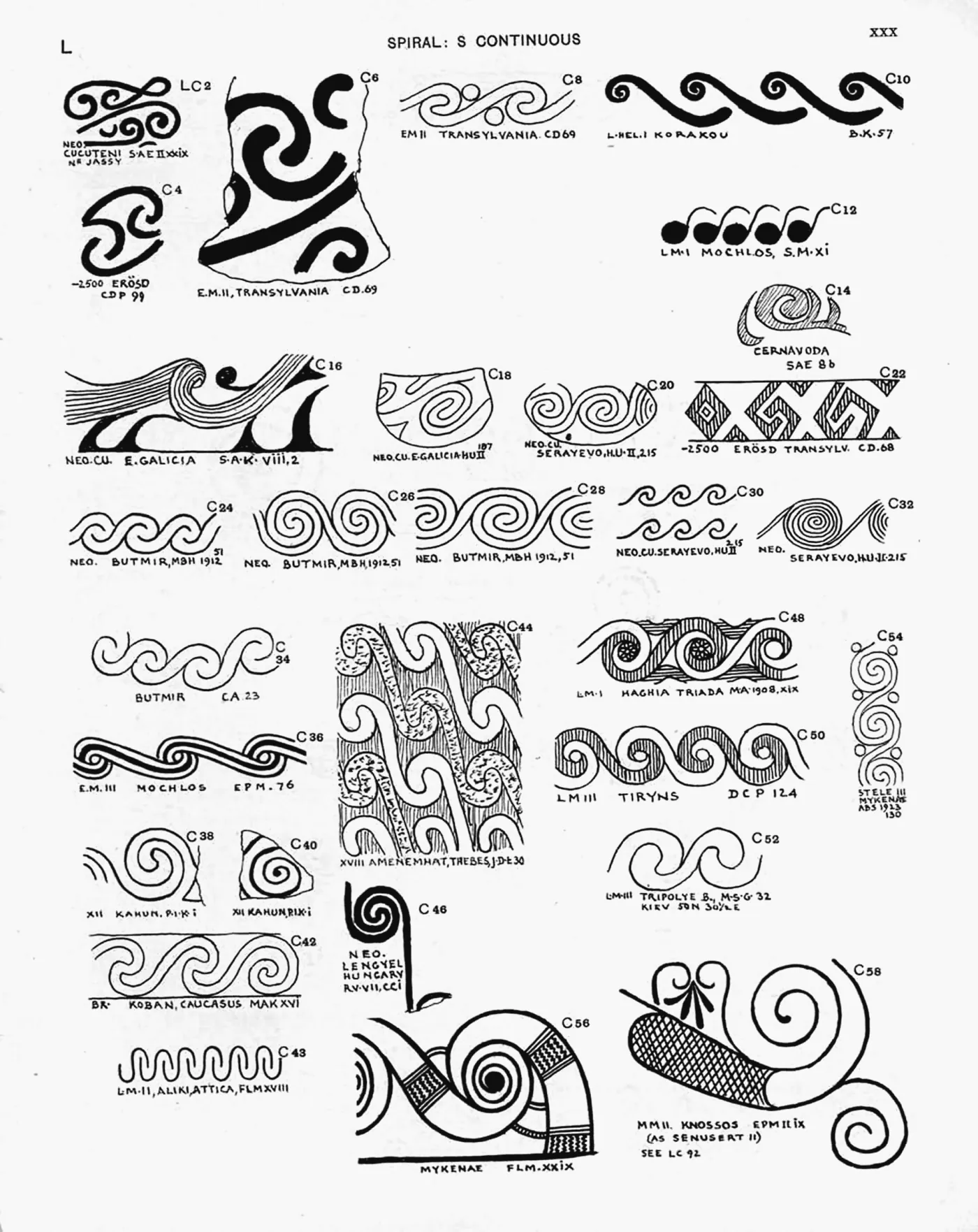
Plate XXX — Spiral: S Continuous Zoom
Plate XXX · Class L

Spiral: S Continuous

Petrie gives this page one line: the looped S S is also aenolithic, and he points at LC 16, 18 and 20 for it. The plate itself is the S run out into a continuous band, hook joined to hook along a border, from Neolithic Butmir and Serayevo through Cretan Mochlos and Tiryns to XIIth-dynasty Kahun. The largest drawing, C 44, is the XVIIIth-dynasty Theban ceiling of Amenemhat, where the same wave of spirals covers a whole field.

his note for this plate is a single sentence. the plate is not.
Plate XXXI — Spiral: S Continuous and with Flowers Zoom
Plate XXXI · Class L

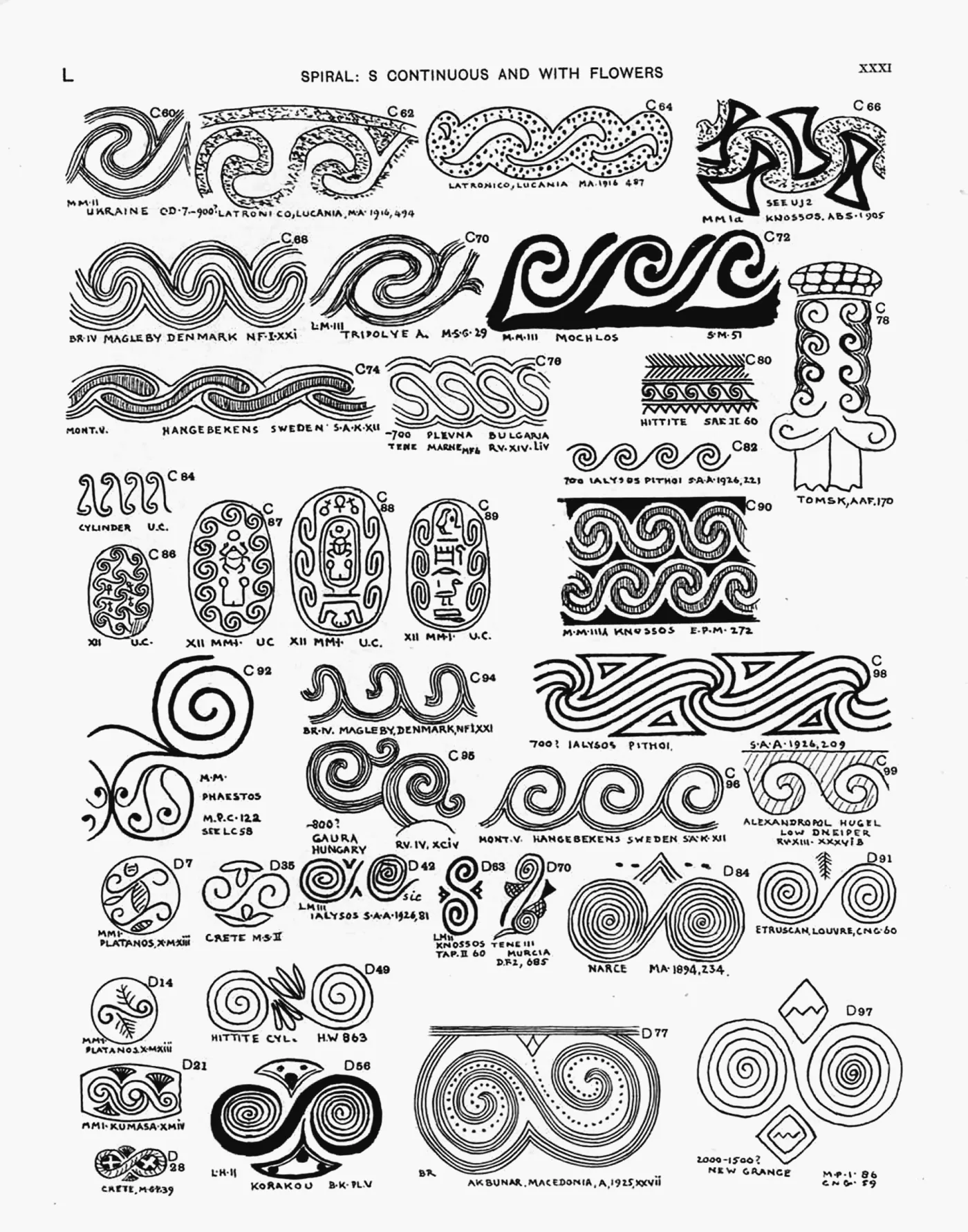
Spiral: S Continuous and with Flowers

Petrie sorts the continuous S by treatment. The multiple band, several lines running parallel, was favoured in Russia and Scandinavia, LC 60, 68, 70, 74, 94-96; the spotted band belongs to the south, LC 62, 64, 66. The Egyptian scarabs date themselves: circular spirals, C 86, 87, in the XIth and early XIIth dynasty, oval ones, C 88, 89, later, though Ur had the oval first.

The S with sprigs or flowers, LD 14 and 56, runs from -2500 to -1500 and travels west to New Grange, D 97.

Plate XXXII — Spiral: Winding Band, S Borders and Paired Zoom
Plate XXXII · Class L

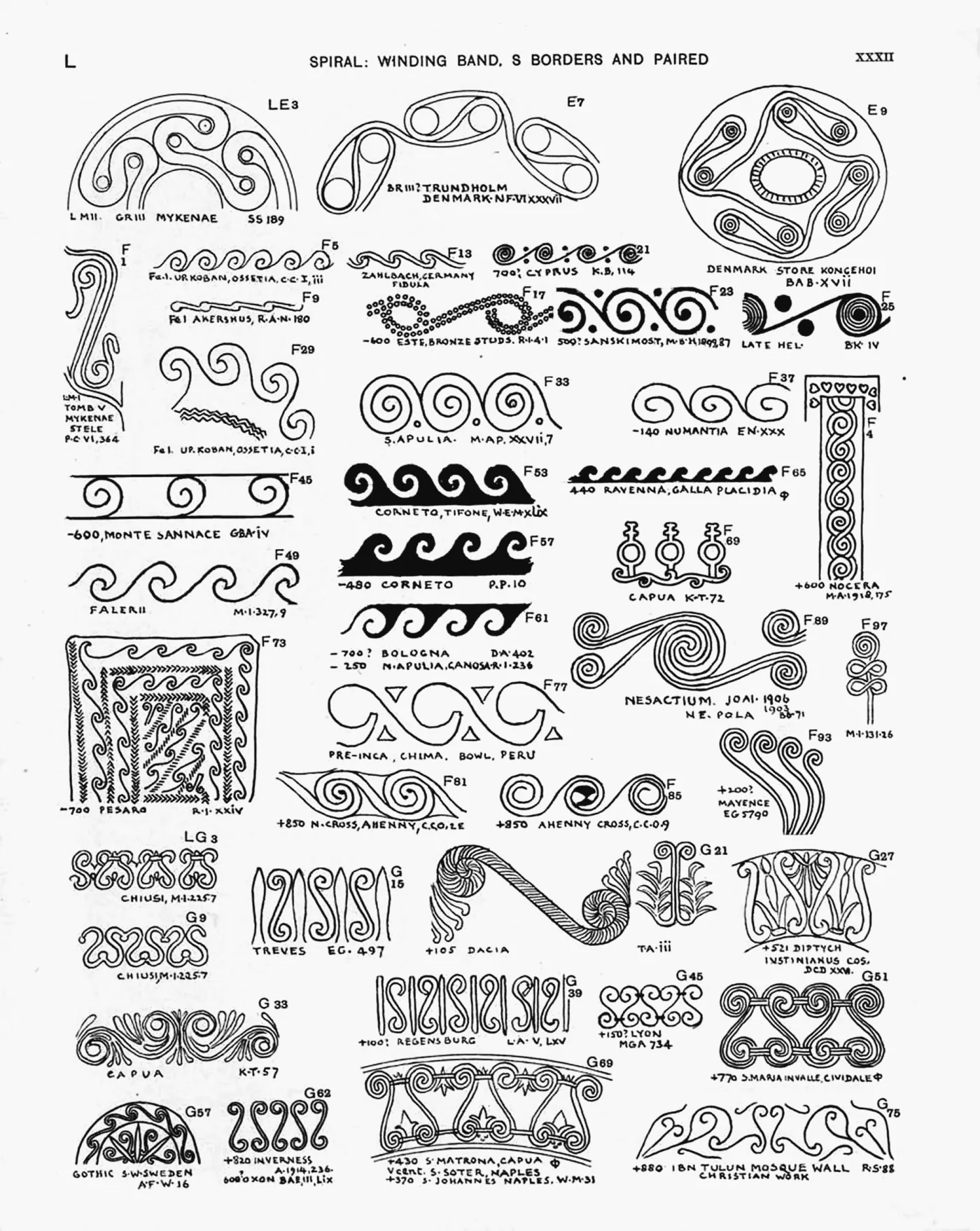
Spiral: Winding Band, S Borders and Paired

The note is one sentence: the band winding round centres, LE 3 at Mykenae, passed west and reached Denmark, LE 7, 9, in the same age. Those two Danish pieces head the plate. The rest is the S worked into borders — solid black waves from Corneto, a running band from Ravenna at +440, F 65, the Ahenny crosses, F 81, 85 — and then paired and facing scrolls at the foot, ending on the wall of the Ibn Tulun mosque at +880.

a pre-inca bowl from peru, F 77, sits in the middle of the page and gets no comment at all.
Plate XXXIII — Spiral: Triple, Quadruple, Pairs Zoom
Plate XXXIII · Class L

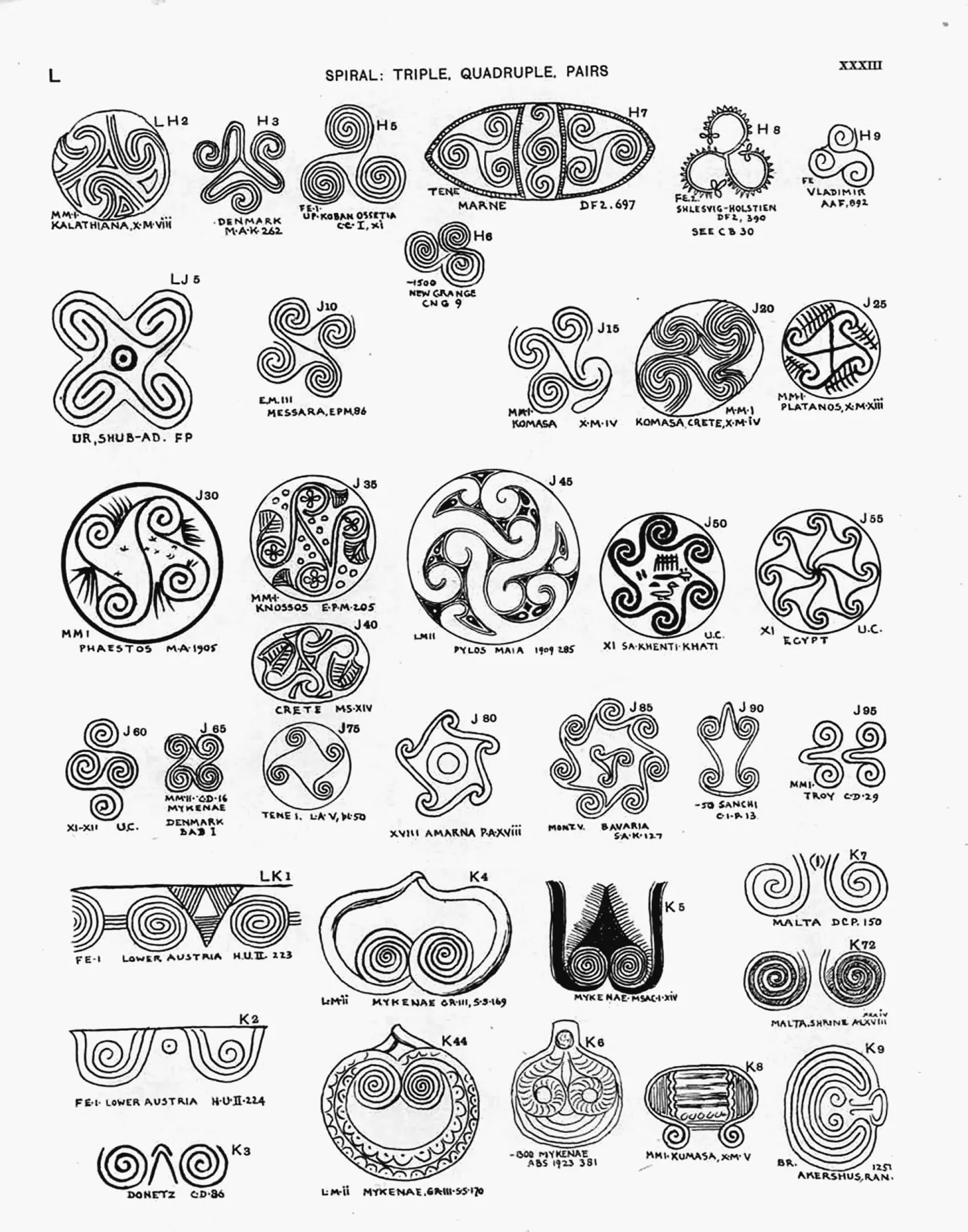
Spiral: Triple, Quadruple, Pairs

Petrie leaves this plate without comment. It sorts the spiral by how many are locked together: three coils bent into a trefoil, LH 2-9; four set as a cross or pinwheel, LJ, opening with a piece from Ur, LJ 5; and simple pairs, LK. Most are drawn as filled roundels — Cretan seal-stones from Kalathiana, Platanos, Knossos and Phaestos, Mykenaean gold, a Maltese shrine pair — so the page reads as a sheet of small discs, each spun to a different rhythm.

Plate XXXIV — Spiral: Trefoil, C Groups Zoom
Plate XXXIV · Class L

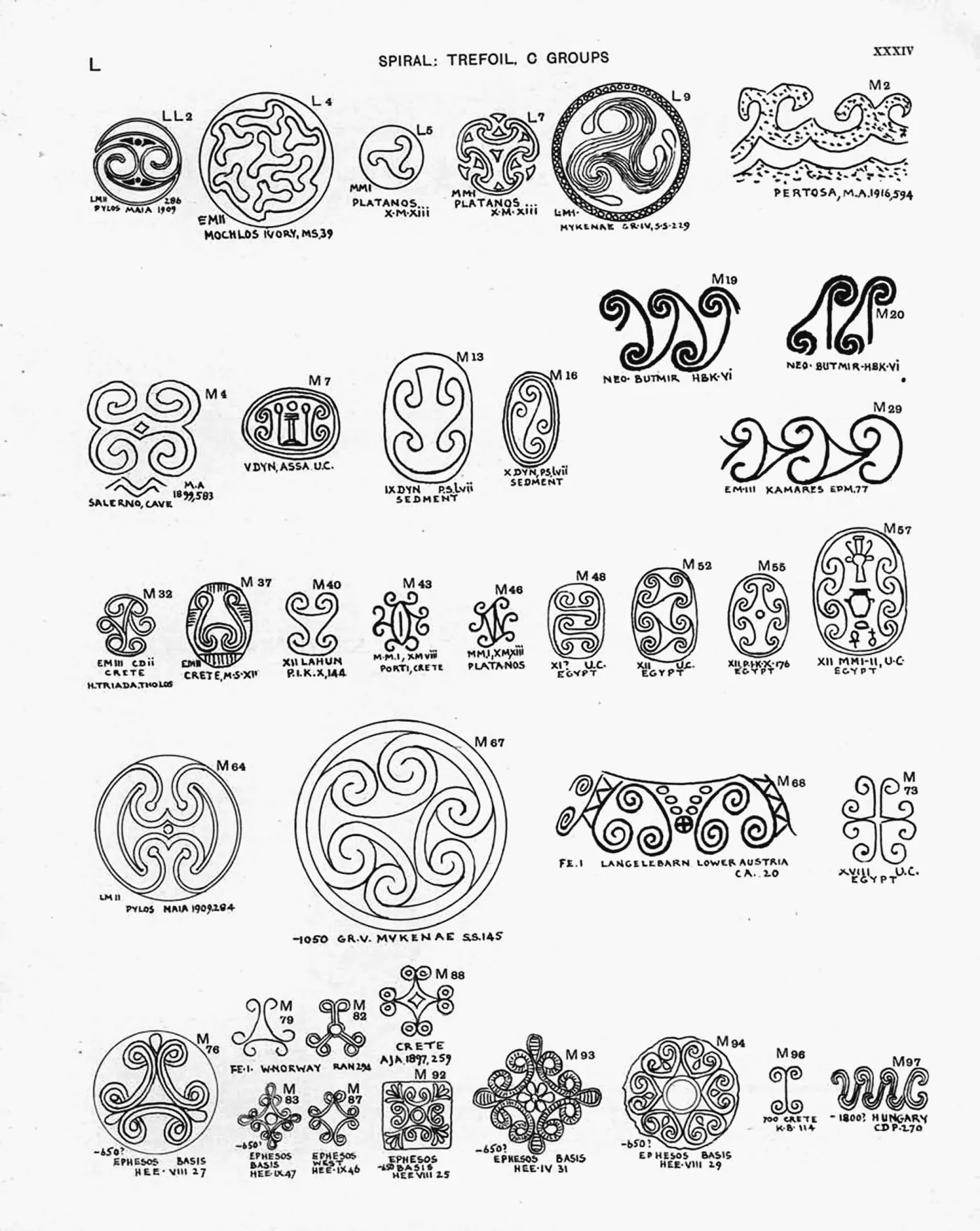
Spiral: Trefoil, C Groups

Here the S gives way to the C. Petrie says the C spiral begins with LM 19 — drawn on this page from Neolithic Butmir — and seems to rise later than the S form. His earliest Egyptian instance is M 7, a Vth-dynasty piece, which he puts at about -3400.

The plate runs from Cretan trefoils and a Mochlos ivory disc, L 4, through rows of Egyptian scarab backs filled with paired C-scrolls, to a bank of Ephesos column-base ornaments at the foot.

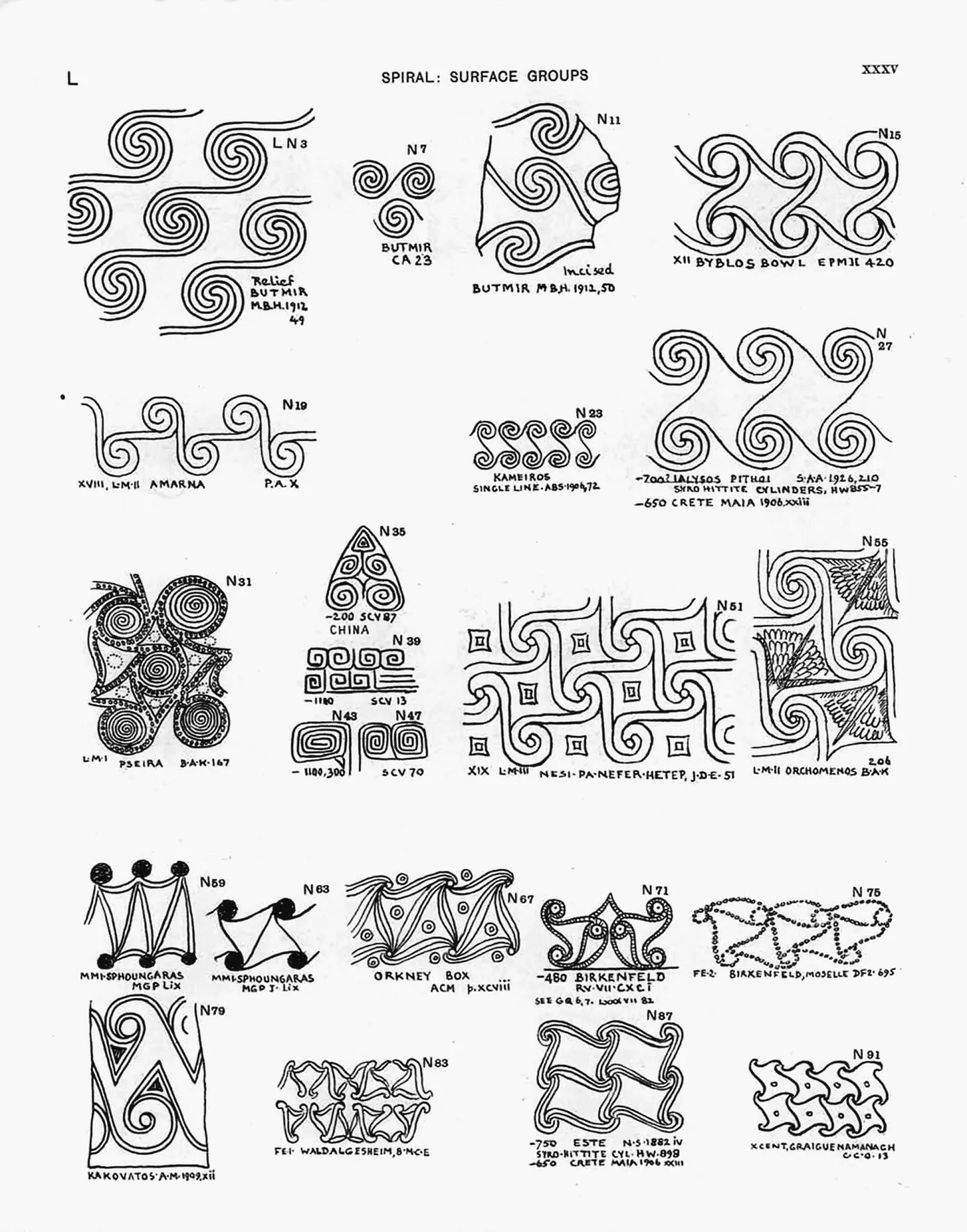
Plate XXXV — Spiral: Surface Groups Zoom
Plate XXXV · Class L

Spiral: Surface Groups

No note from Petrie for this plate. It collects the spiral used to cover a whole surface rather than to run along a border: coils linked in every direction and repeated over a field. Butmir pottery supplies the earliest, in relief and incised; then a XIIth-dynasty bowl from Byblos, painted ceilings from a XIXth-dynasty Egyptian tomb, N 51, and Orchomenos, N 55, and Chinese pieces, N 35-47. Lower down the same lattice appears as dotted and stippled outlines, N 71-75.

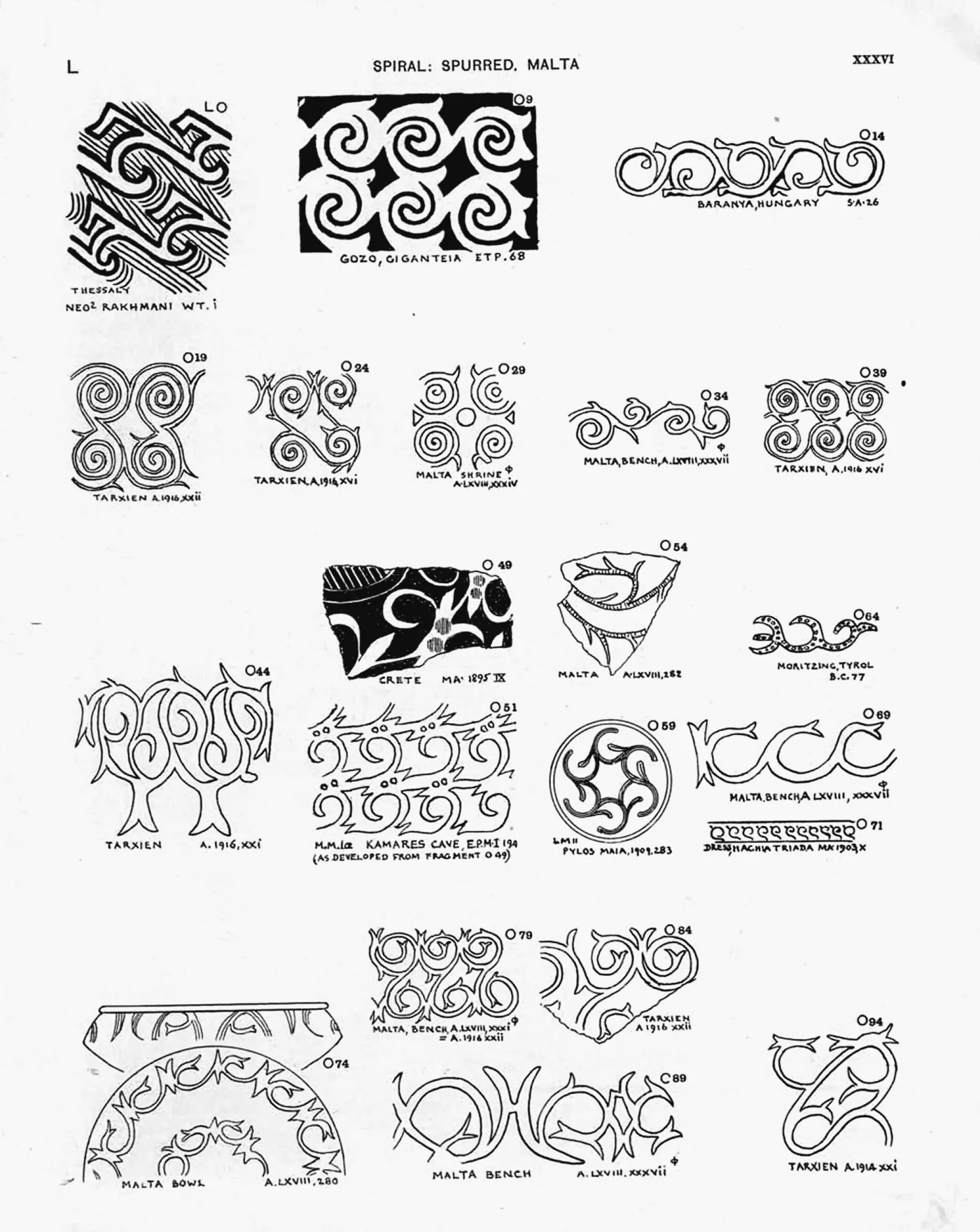
Plate XXXVI — Spiral: Spurred, Malta Zoom
Plate XXXVI · Class L

Spiral: Spurred, Malta

Petrie left no note here. The plate isolates the spurred spiral — a coil with a pointed barb or leaf thrown off at each turn — and the bulk of it is Maltese: Tarxien slabs, the carved benches and the shrine, a bowl, and a solid black panel from the Giganteia on Gozo, O 9. Around them sit a Thessalian Neolithic relief, a Kamares fragment from Crete, O 49, with the full pattern developed from it alongside, O 51, and strays from Hungary and the Tyrol.

the running head names malta almost as a courtesy; most of the drawings on the page are tarxien.
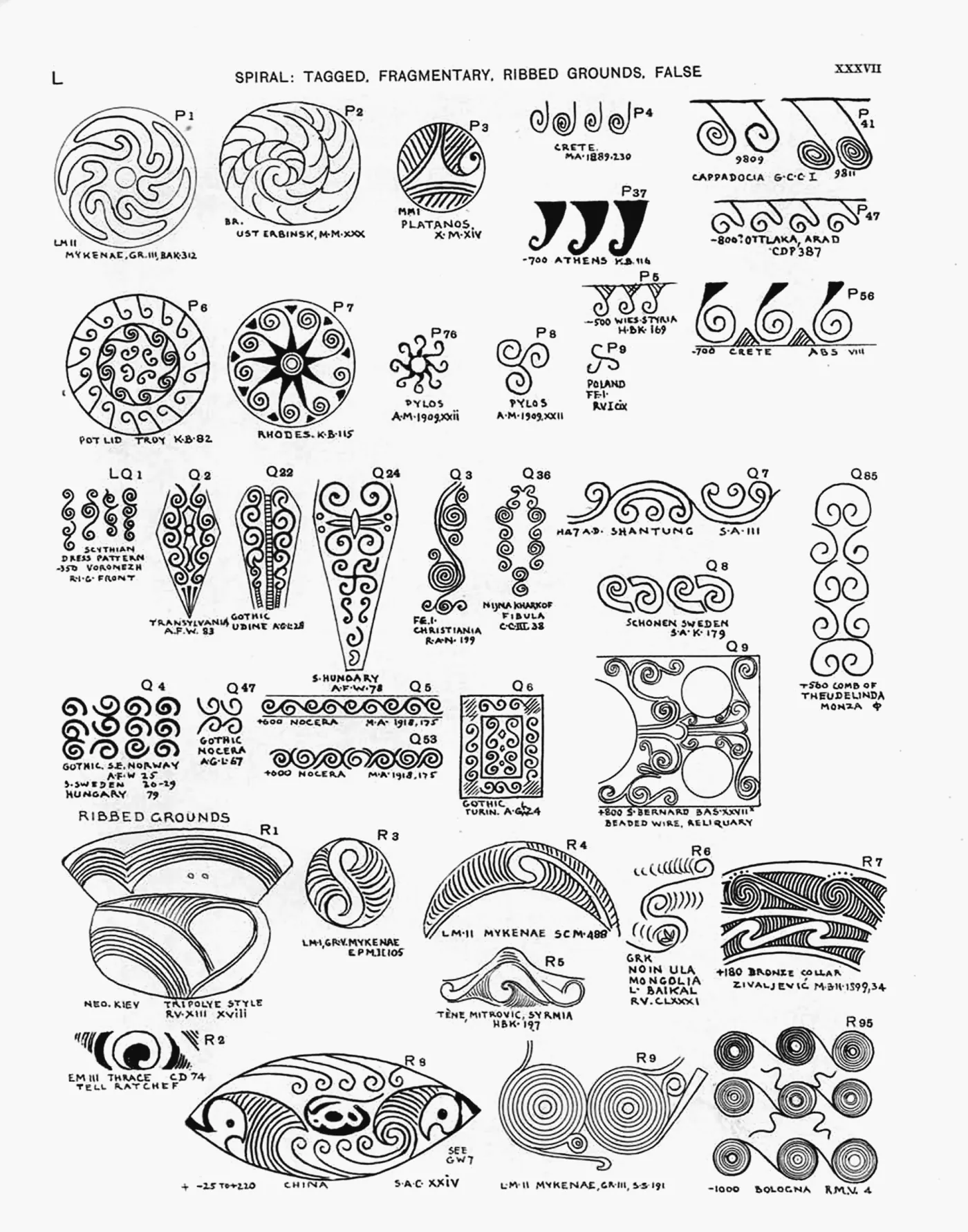
Plate XXXVII — Spiral: Tagged, Fragmentary, Ribbed Grounds, False Zoom
Plate XXXVII · Class L

Spiral: Tagged, Fragmentary, Ribbed Grounds, False

Petrie heads his note "Late Forms". The spiral goes to pieces in Scythia and the north, LQ, surviving as detached hooks on dress patterns, fibulae and combs. The ribbed ground, LR — a curve drawn as a bundle of parallel lines — he traces out of south Russia; it just reached Mykenae about 1600 but was otherwise all northern, and it spread to China. Two designs at the foot, R 9 and 95, he calls false spirals, "merely circles".

two of the patterns here are, on petrie's own reckoning, not spirals at all.
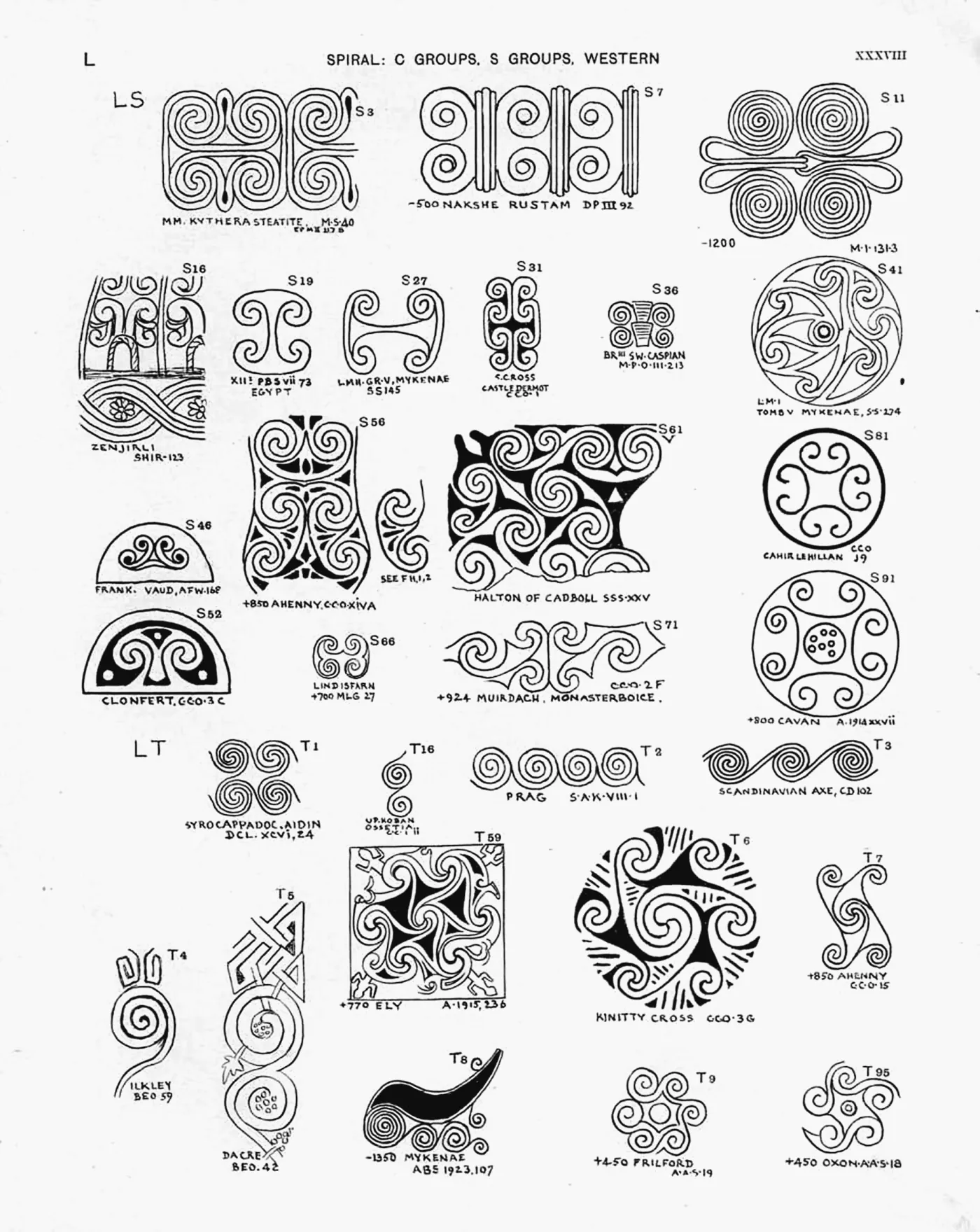
Plate XXXVIII — Spiral: C Groups, S Groups, Western Zoom
Plate XXXVIII · Class L

Spiral: C Groups, S Groups, Western

Petrie treats this plate and the next as British. The C spiral settled in the British Isles, and its form he derives from the lily with curved petals of -1500, FH 1, 2 — the small extract drawn beside the Ahenny panel, LS 56, is his demonstration. Around it are Irish and Scottish crosses and slabs, the Halton of Cadboll stone, S 61, and Lindisfarne, S 66, with earlier Aegean and Egyptian C groups placed at the top for comparison.

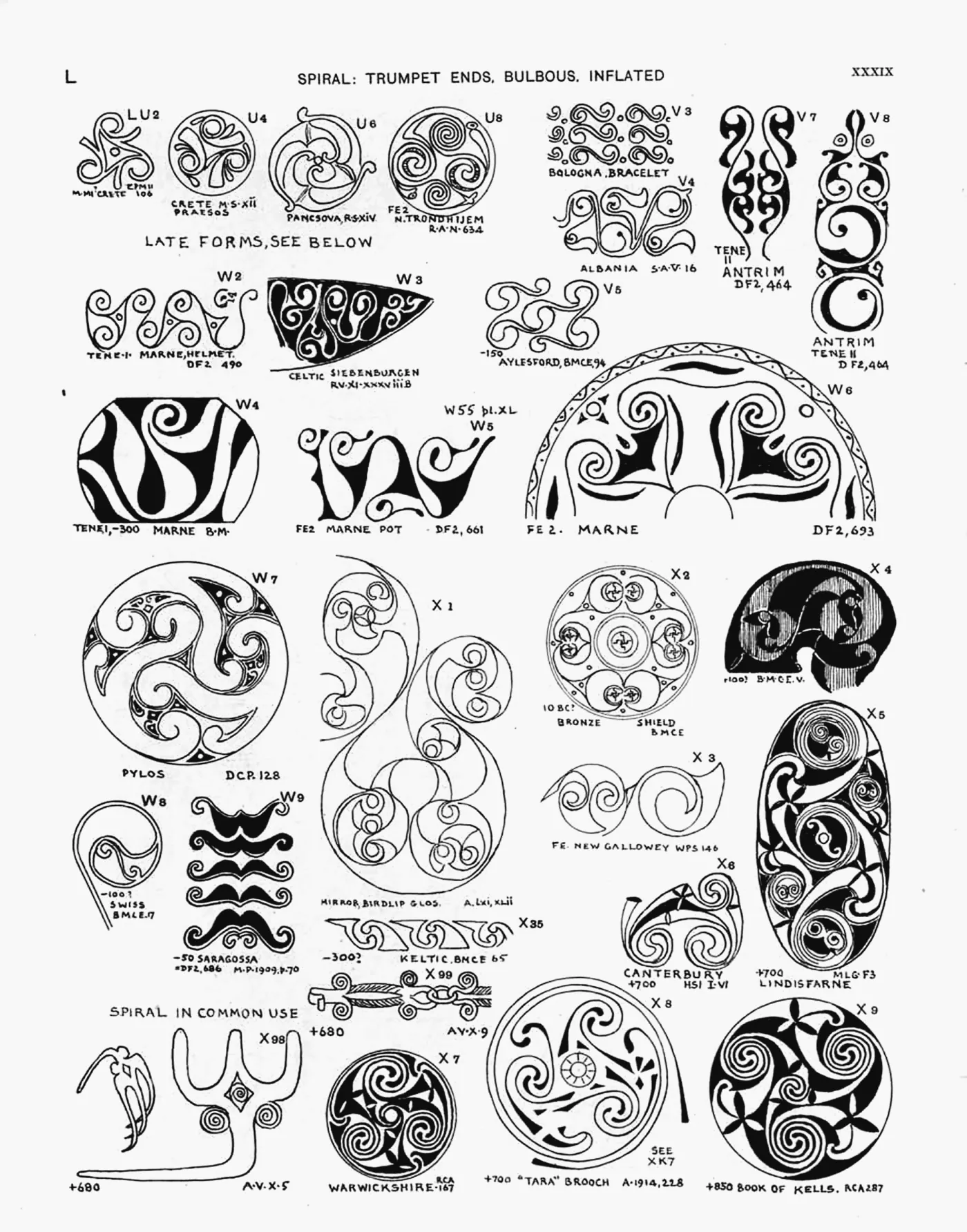
Plate XXXIX — Spiral: Trumpet Ends, Bulbous, Inflated Zoom
Plate XXXIX · Class L

Spiral: Trumpet Ends, Bulbous, Inflated

The trumpet spiral, where two curves meet and flare out into a horn, Petrie starts in Crete about -1500 and finds in Britain by about +100, LX 4. It was then developed hard in Britain, LX 5, 7, and Ireland, LX 8, 9 — Lindisfarne, the Tara brooch, the Book of Kells. The swollen, inflated style, LW, he credits to Celtic taste, while insisting the spirals were here a thousand years before the Celts, who adopted what they found.

on petrie's reckoning the celts turned up a thousand years late to their own best-known ornament.
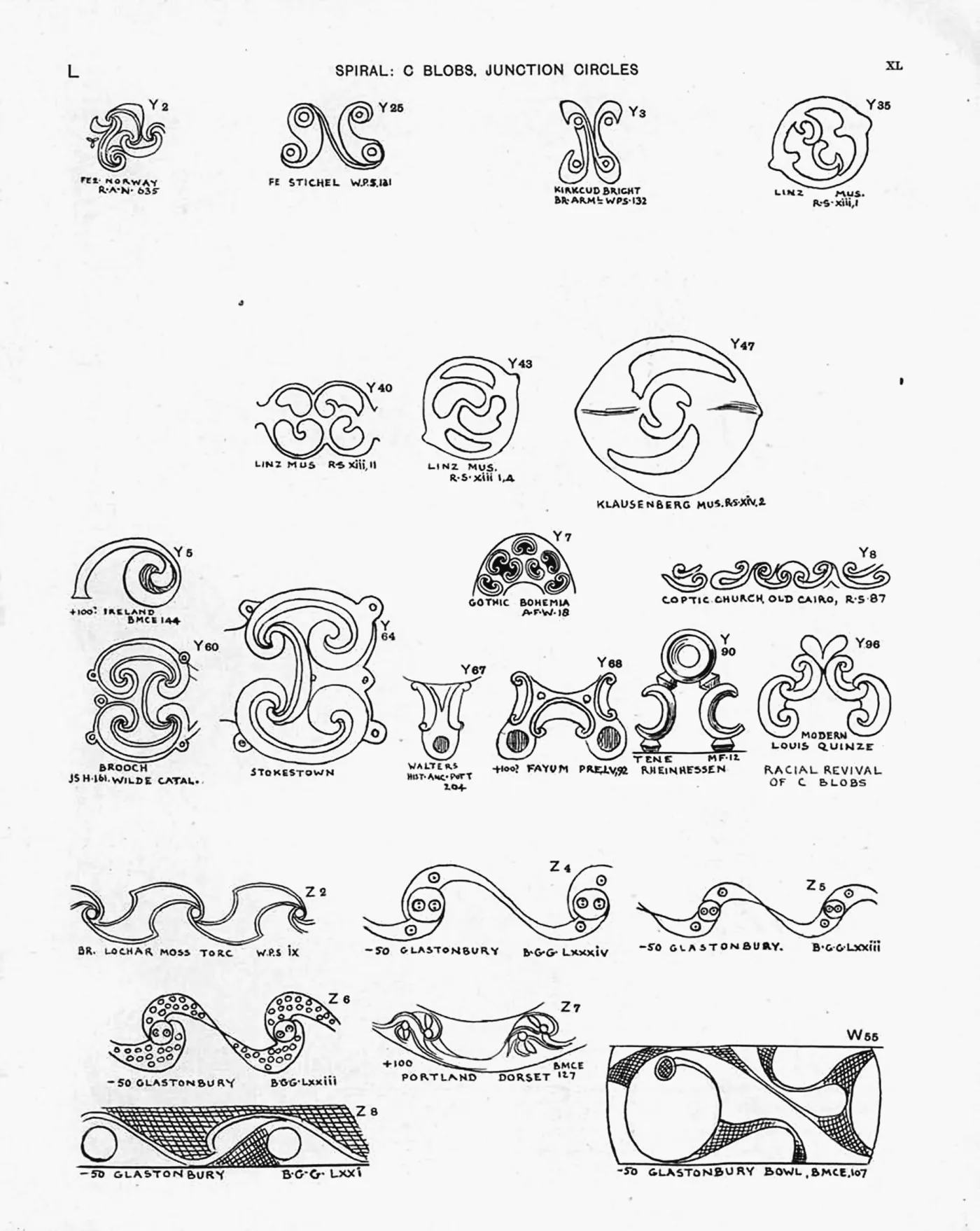
Plate XL — Spiral: C Blobs, Junction Circles Zoom
Plate XL · Class L

Spiral: C Blobs, Junction Circles

The blob form, LY, Petrie assigns to the north, a later growth of the bulbous and inflated spirals of the previous plate. It disappeared entirely after the Roman age, then came back under Louis Quinze, Y 96, and ran through the jewellery and furniture of that time. Two Roman lamps carry it, Y 67, 68, which he explains by Caesar's Gaulish captives working in the Roman potteries.

The lower group, LZ, joins spirals with a circle, often double-centred: pre-Roman in Britain, from Glastonbury and the Lochar Moss torc.

the c blob went quiet for a thousand years and came back as french furniture.