Decorative Patterns
Classes H–K · Plates XXV–XXVIII

Rosettes, Suns & Radiate Forms

Everything round with petals or rays, filed strictly by how many of them there are — three, then eight, then thirty-two.

Plate XXV — Rosettes, 3 to 8 Petals Zoom
Plate XXV · Class H

Rosettes, 3 to 8 Petals

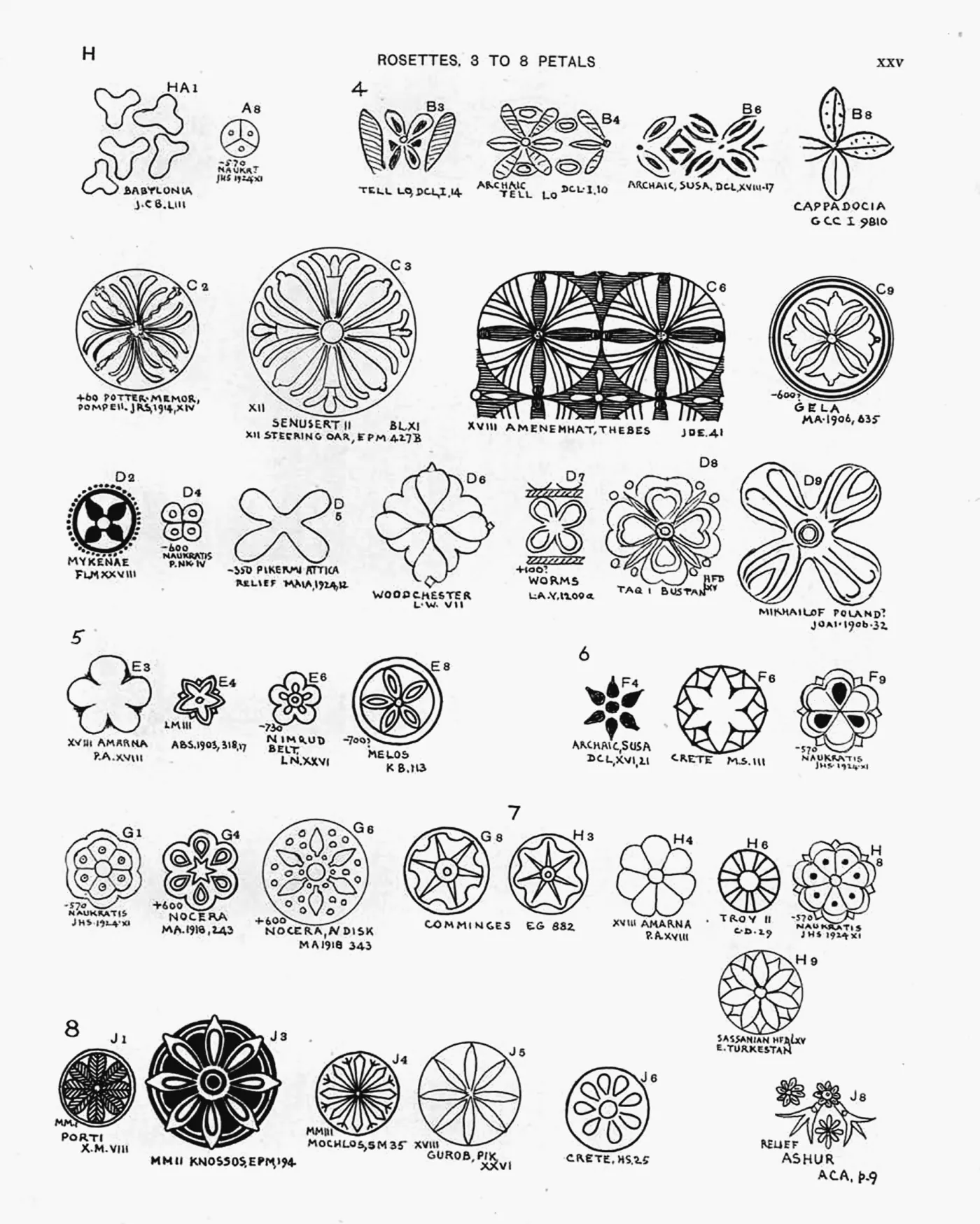
Petrie's eye is caught by one pair on this page. The Pompeian potter's stamp, HC 2, dated +60, sits beside an Egyptian rosette from a XIIth dynasty steering oar, HC 3, and the two are so alike that he proposes a piece of old Egyptian design was carried over in a grain ship to Puteoli, and copied there.

Everything else is a census. The rosettes are sorted strictly by petal count, three up to eight, with the number printed in the left margin as each group begins.

a whole grain-ship theory, resting on two flowers that happen to look alike.
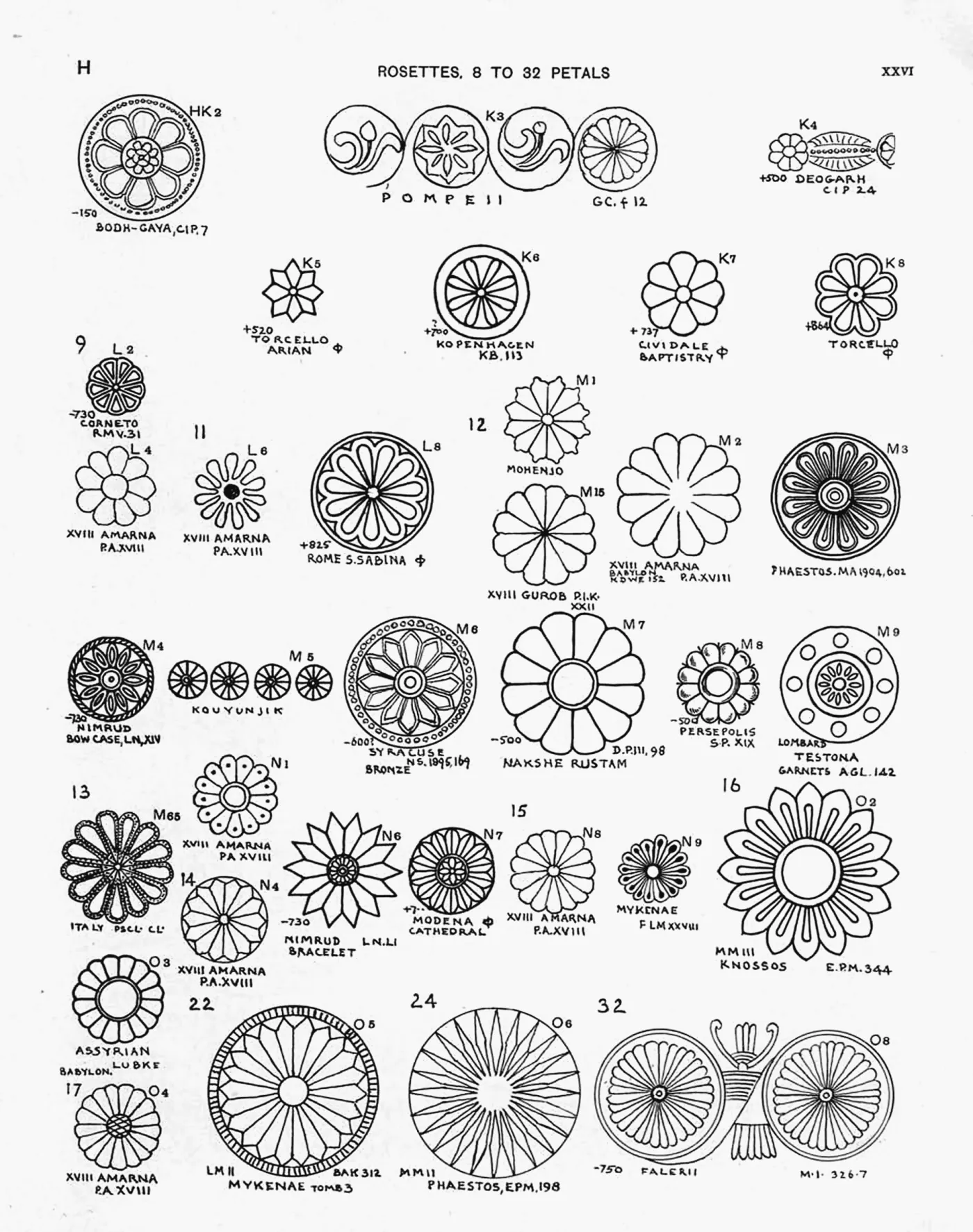
Plate XXVI — Rosettes, 8 to 32 Petals Zoom
Plate XXVI · Class H

Rosettes, 8 to 32 Petals

Petrie left no note for this plate. It simply continues class H upward: where the previous page ran from three petals to eight, this one carries on from eight to thirty-two, the count printed in the left margin as each new group opens, 9, 11, 12, 13, 14, 15, 16, 17, 22, 24, and finally 32.

The drawings tighten as the count rises, from open eight-petalled flowers to discs of fine radiating leaves that read almost as wheels.

Plate XXVII — Hills, Sun, Moon, Radiate 3 to 7 Points Zoom
Plate XXVII · Class JK

Hills, Sun, Moon, Radiate 3 to 7 Points

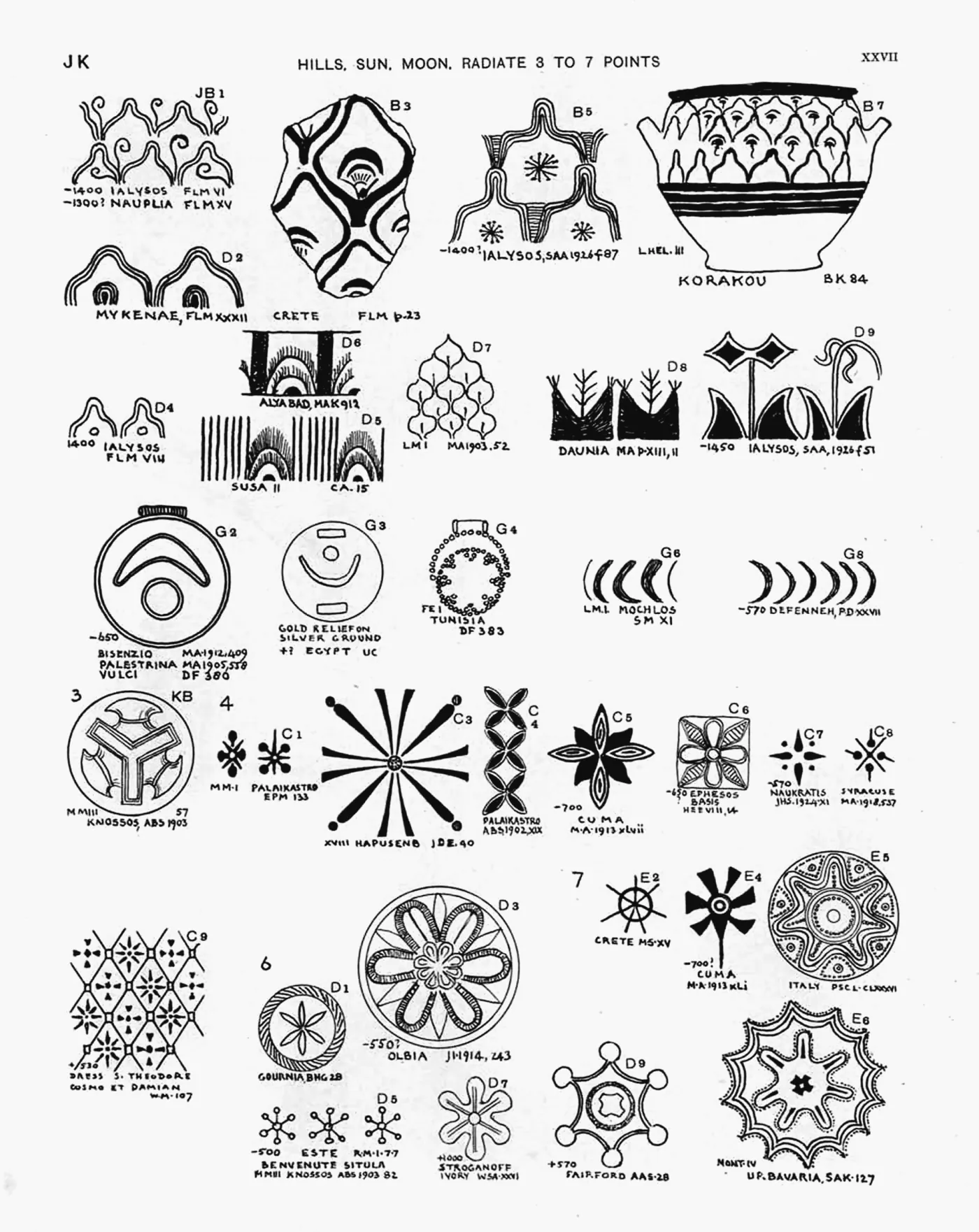
Petrie singles out two things here. The hills with plants and flowers, JB 1-7, he reads as a real development of scenery in 1400 B.C. rather than mere ornament. And of the radiate pattern JE 6 he says only that it is "an extraordinary union of 7 and 13 points".

The page carries two classes at once, J and K: hill, arch and crescent forms across the upper half, then radiate stars below, sorted by point count with 3, 4, 6 and 7 marked down the margin.

a plate that opens with landscape and closes with a star that could not decide between seven points and thirteen.
Plate XXVIII — Radiate, 8 and More Points Zoom
Plate XXVIII · Class K

Radiate, 8 and More Points

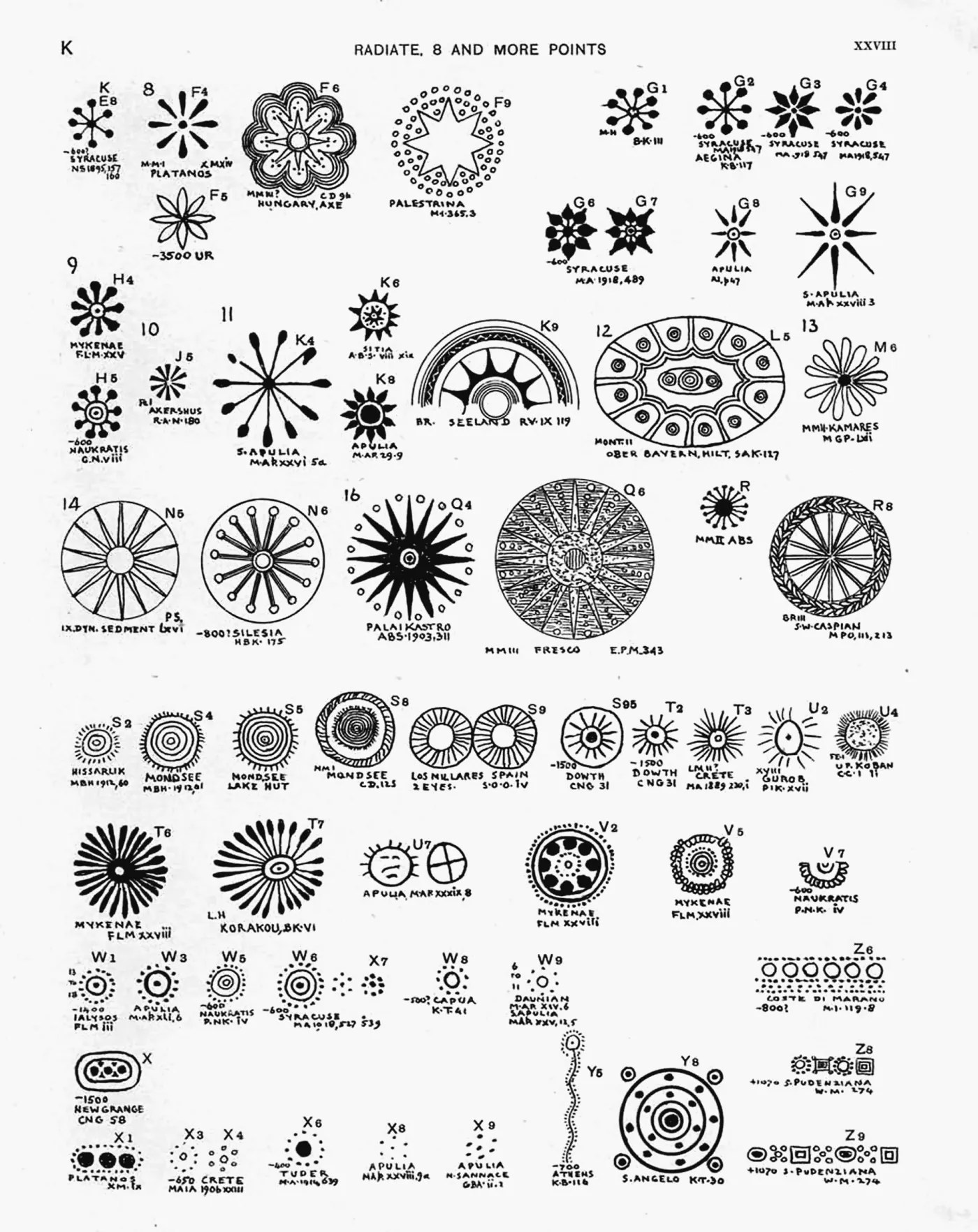
Petrie's favourite here is the sun, JQ 6, copied from a fresco lettered MM III: "a yellow disc, with red centre, shining yellow rays and spangles of light on a blue ground". The plate itself is pen-and-ink, so all that colour survives only in his sentence.

The rest continues the radiate class past eight points, the count marked in the margin, 8, 9, 10, 11, 12, 13, 14, 16, before running on into concentric discs, spoked wheels and rings of dots.

the only colour on this page is in the note about it.