Decorative Patterns
Classes S–T · Plates LVII–LXIV

Crosses & Triangles

Cross emblems sorted by age — before 2000 B.C., through the pagan and Christian transition, then into settled Christian usage — followed by triangles.

Plate LVII — Cross Emblems Before B, C, 2000 Zoom
Plate LVII · Class S

Cross Emblems Before B, C, 2000

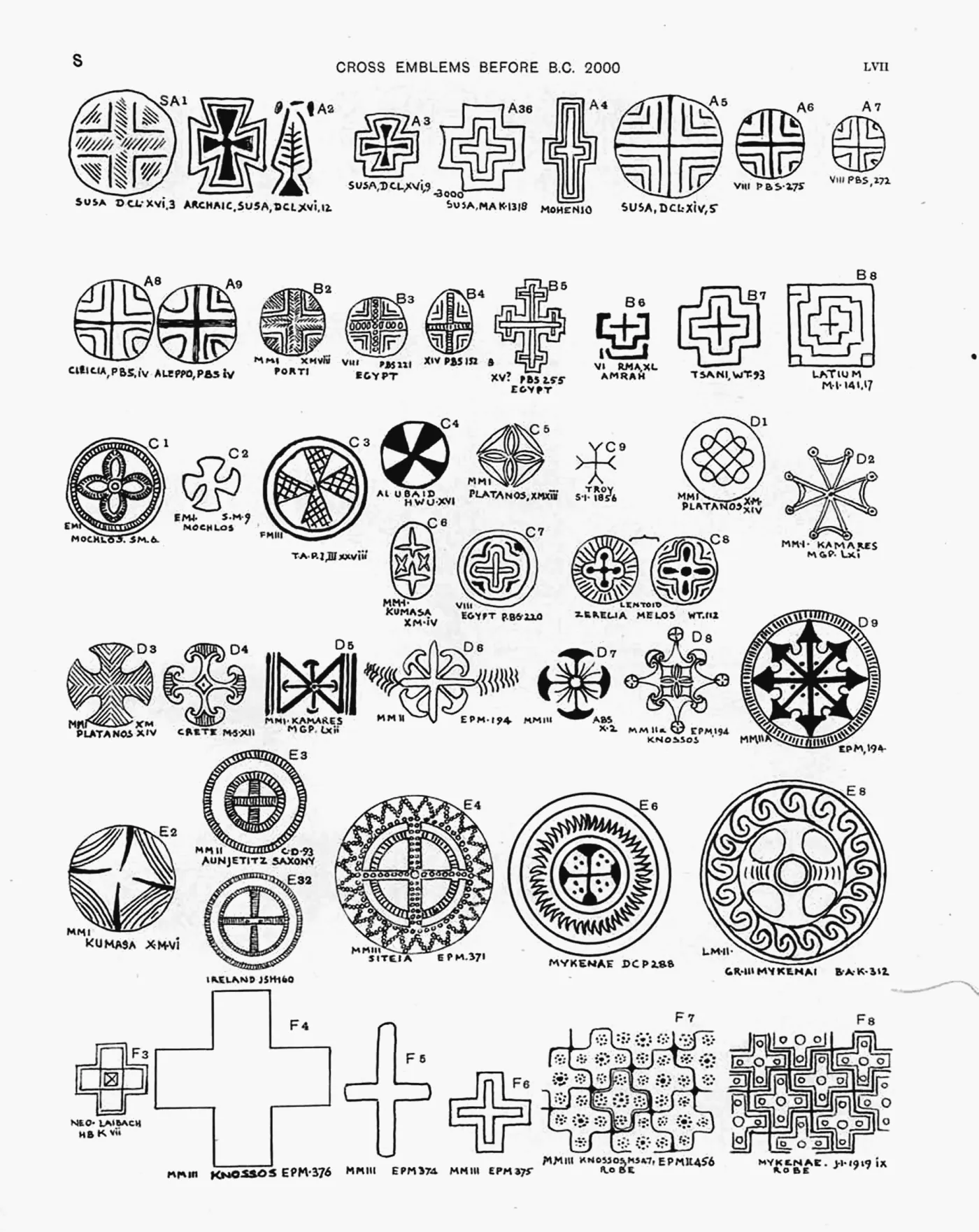
Petrie dates the cross as an emblem to about -3000, at Susa and in India — the Mohenjo-daro cross, SA 4 — set off by a double border in SA 1 to 4. That, he argues, makes the contemporary Egyptian signs, A 6, 7, emblems rather than mechanical line-work; Cilicia and Aleppo, A 8, 9, fill the gap between.

By -2600 Crete began elaborating it, SD; the plain equilateral cross of the Knossos shrine, SF 4, about 2300 B.C., is, he says, exactly the well-known Greek cross of Christian times.

his whole case rests on a border — the frame around SA 1 to 4 is what convinces him these are emblems and not idle line-work.
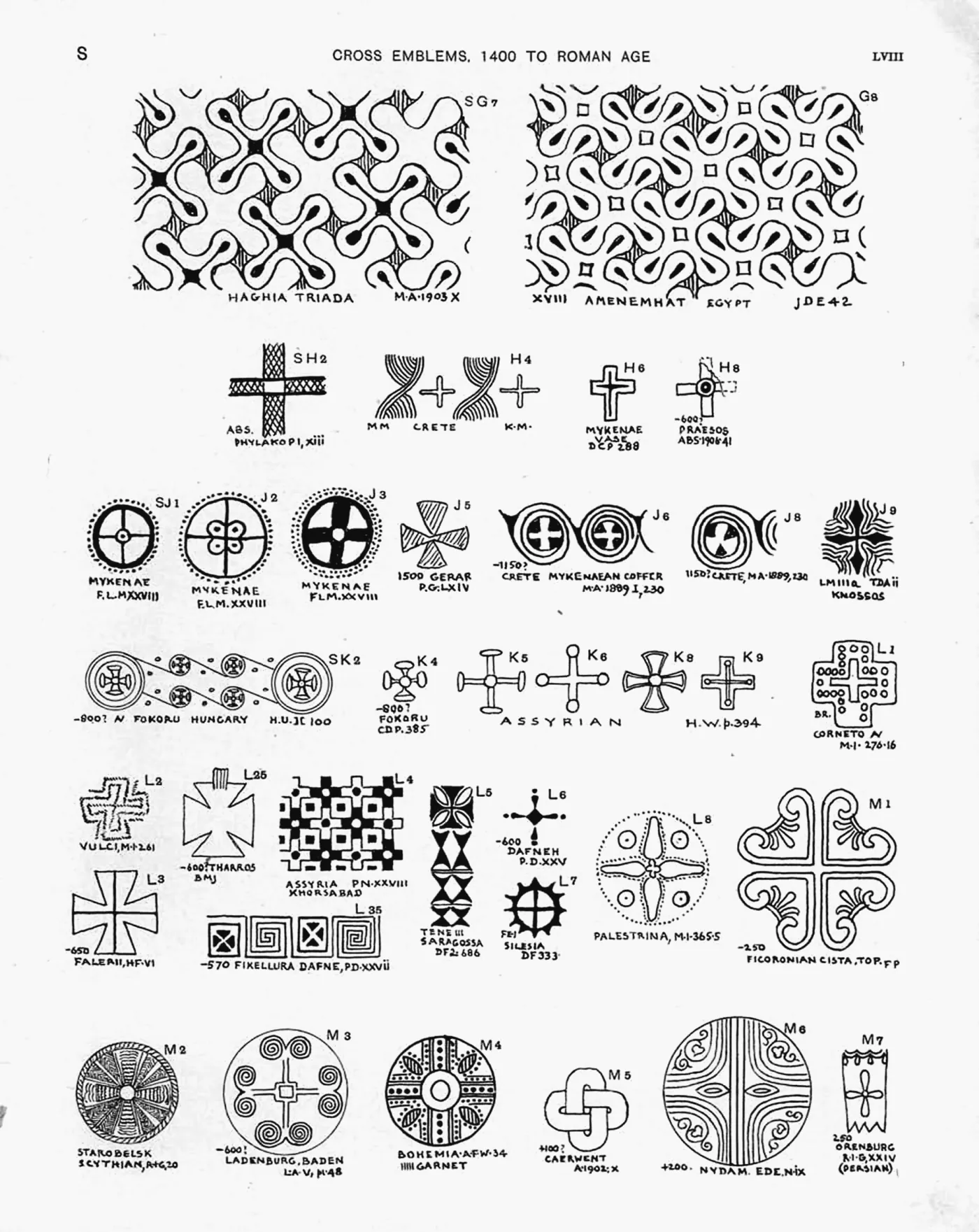
Plate LVIII — Cross Emblems, 1400 to Roman Age Zoom
Plate LVIII · Class S

Cross Emblems, 1400 to Roman Age

No note of Petrie's heads this plate, but the figure codes at the end of his Pl. LVII note land here: the fanciful woven crosses G 7, 8, the degraded forms SJ, and the Assyrian crosses with emphasized terminals, SK 5 to 9, copied in the north at SK 2.

The page carries the series from about -1400 to Roman times: Mykenaean quartered discs, knobbed Assyrian crosses, a black chequer from Khorsabad, Etruscan and Italian pieces, and a foot row of Scythian, garnet-inlay and Nydam discs.

the two big panels at the top, one from crete and one from egypt, are close enough to pass for the same bolt of cloth.
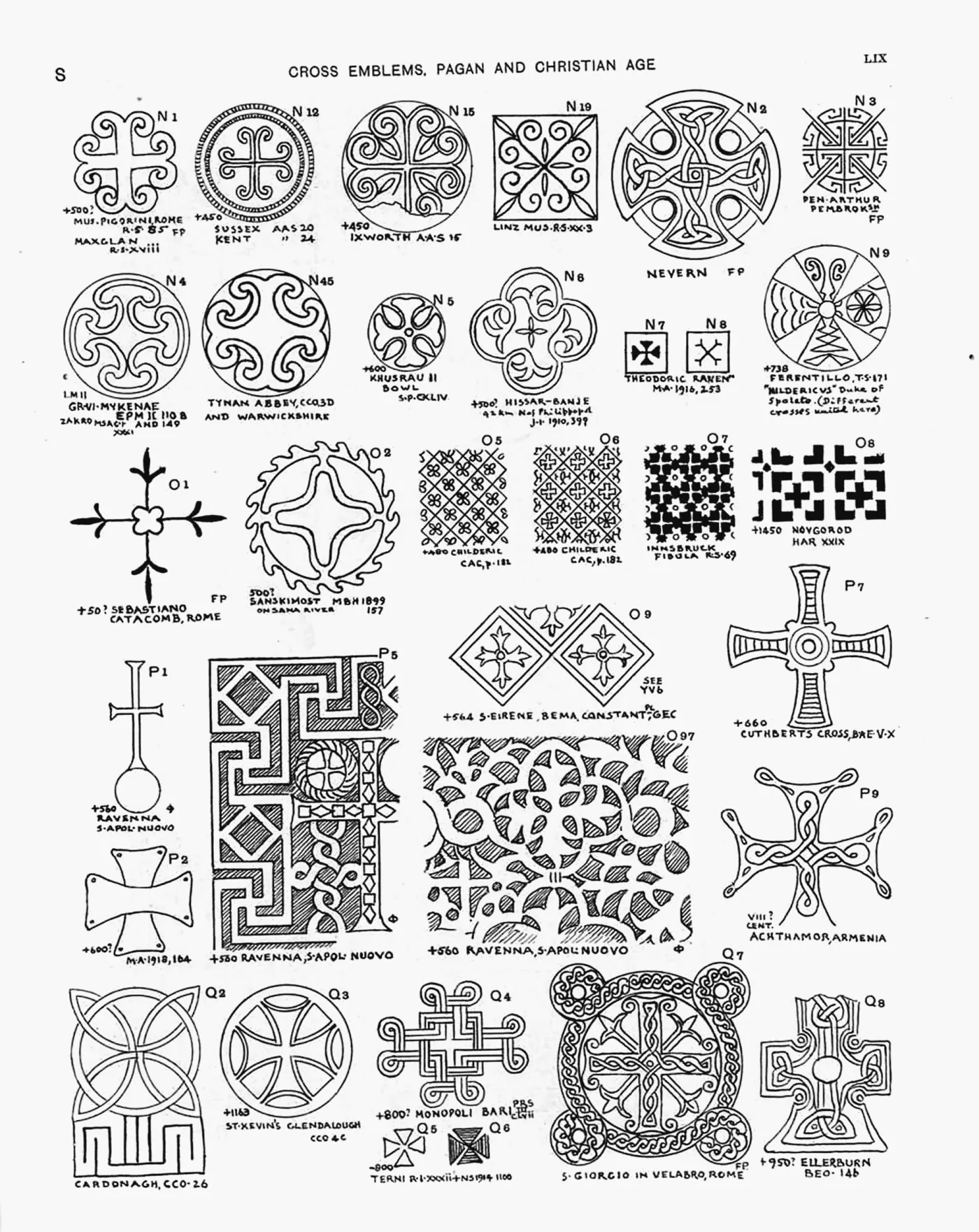
Plate LIX — Cross Emblems, Pagan and Christian Age Zoom
Plate LIX · Class S

Cross Emblems, Pagan and Christian Age

Petrie's point here is continuity: reaching Christian times, the pagan forms were simply kept on. The Baden disc M 3 continues as N 1 and N 12, the Ficoronian cista design M 1 as N 15, and the Mykenaean N 4 as N 45 at Tynan Abbey. None of the ornate pagan forms, he adds, were used religiously until the fifth century A.D., citing O 9 and O 97.

The page ends with Irish and Italian slab crosses worked in interlace.

the four-comma whorl at the top of the page gets drawn over and over, pagan and christian alike. that is precisely his argument.
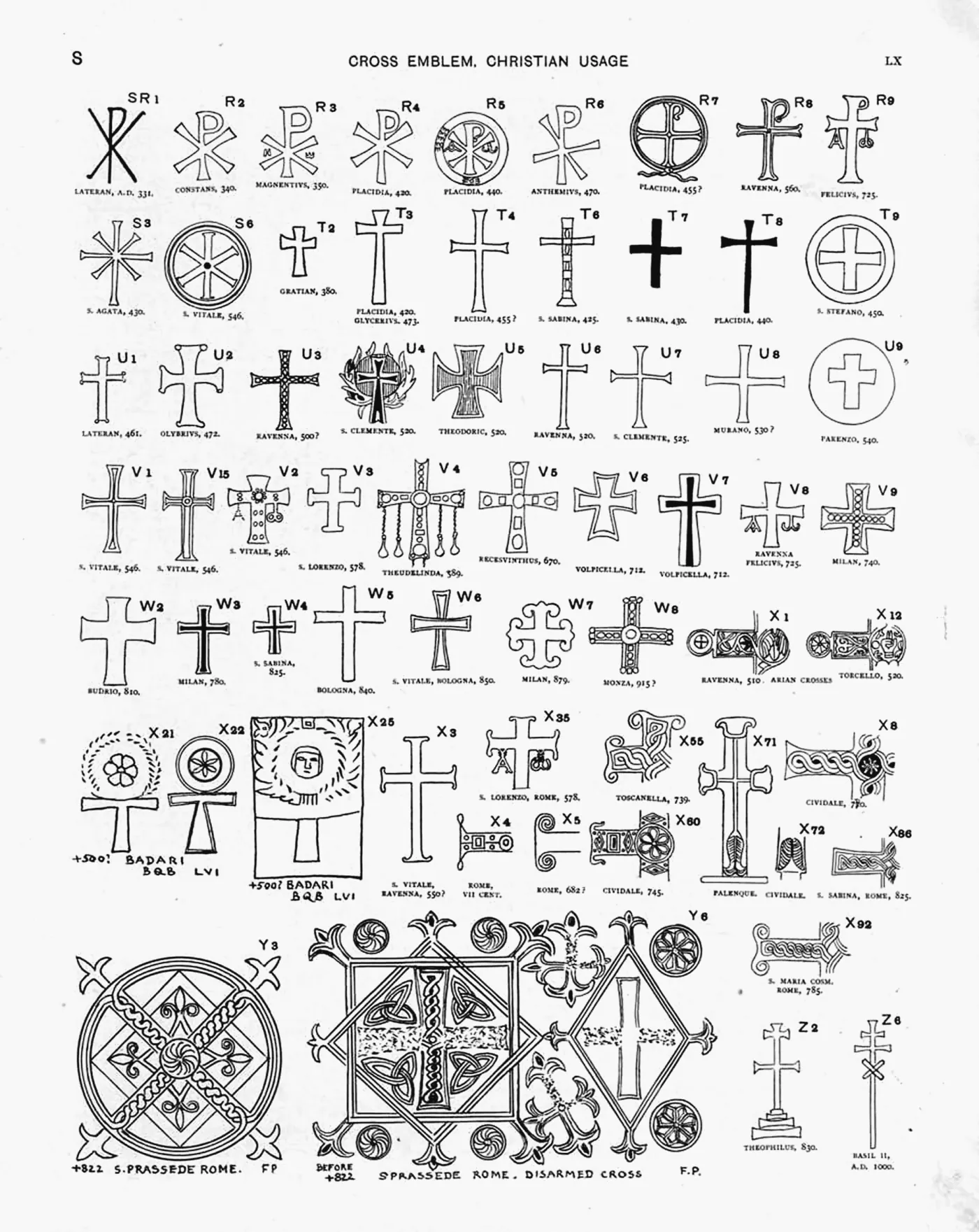
Plate LX — Cross Emblem, Christian Usage Zoom
Plate LX · Class S

Cross Emblem, Christian Usage

Petrie dates the sequence closely. The XP monogram runs +331 to +470; the variant whose P is Horus' lock of hair, +440 to +560, and stays common in Egypt later. The plain cross first appears in +380, the jewelled cross in +425, expanded terminals about +450. The Arian cross carries discs at the terminals, SX 1, 12.

He then notes the adored cross at Palenque, in Central America, with terminals of the +600 type, and wonders whether the Nestorian mission of +638 to China could account for it.

he gets from the shape of a cross terminal at palenque to chinese contact with america in two sentences flat.
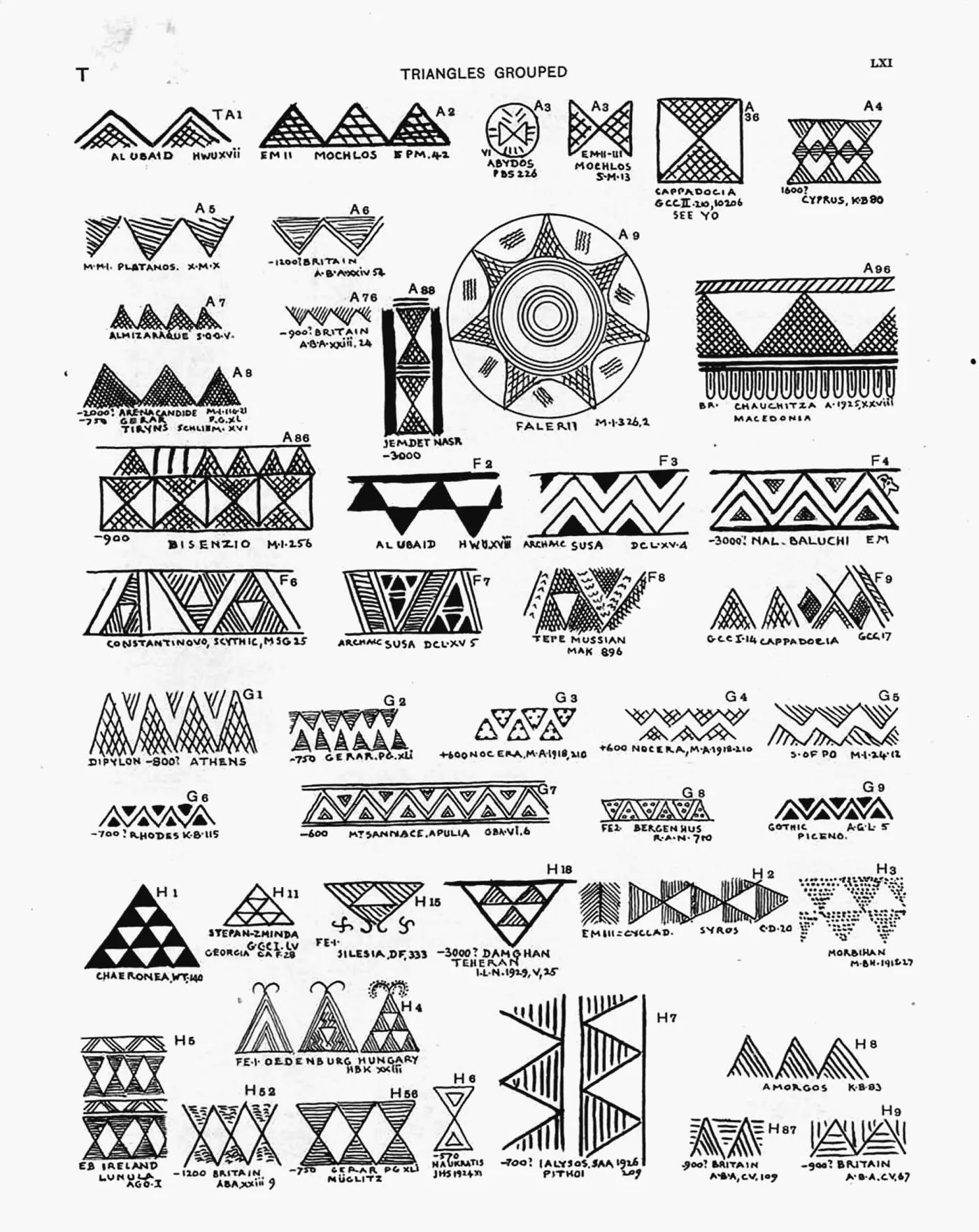
Plate LXI — Triangles Grouped Zoom
Plate LXI · Class T

Triangles Grouped

The class T plates open here, with no note from Petrie. The page collects grouped triangles: rows of hatched and cross-hatched triangles (TA), solid black zigzag bands (F), lighter outlined and dotted friezes (G), and at the foot triangles filled with smaller triangles or set point to point (H).

Dates on the drawings run from -3000 at Jemdet Nasr to about -570 at Naukratis, with Britain, Cappadocia, Susa and Greece all represented.

H 4 gives its triangles little curling horns, the one whimsical thing on a page of otherwise very disciplined zigzags.
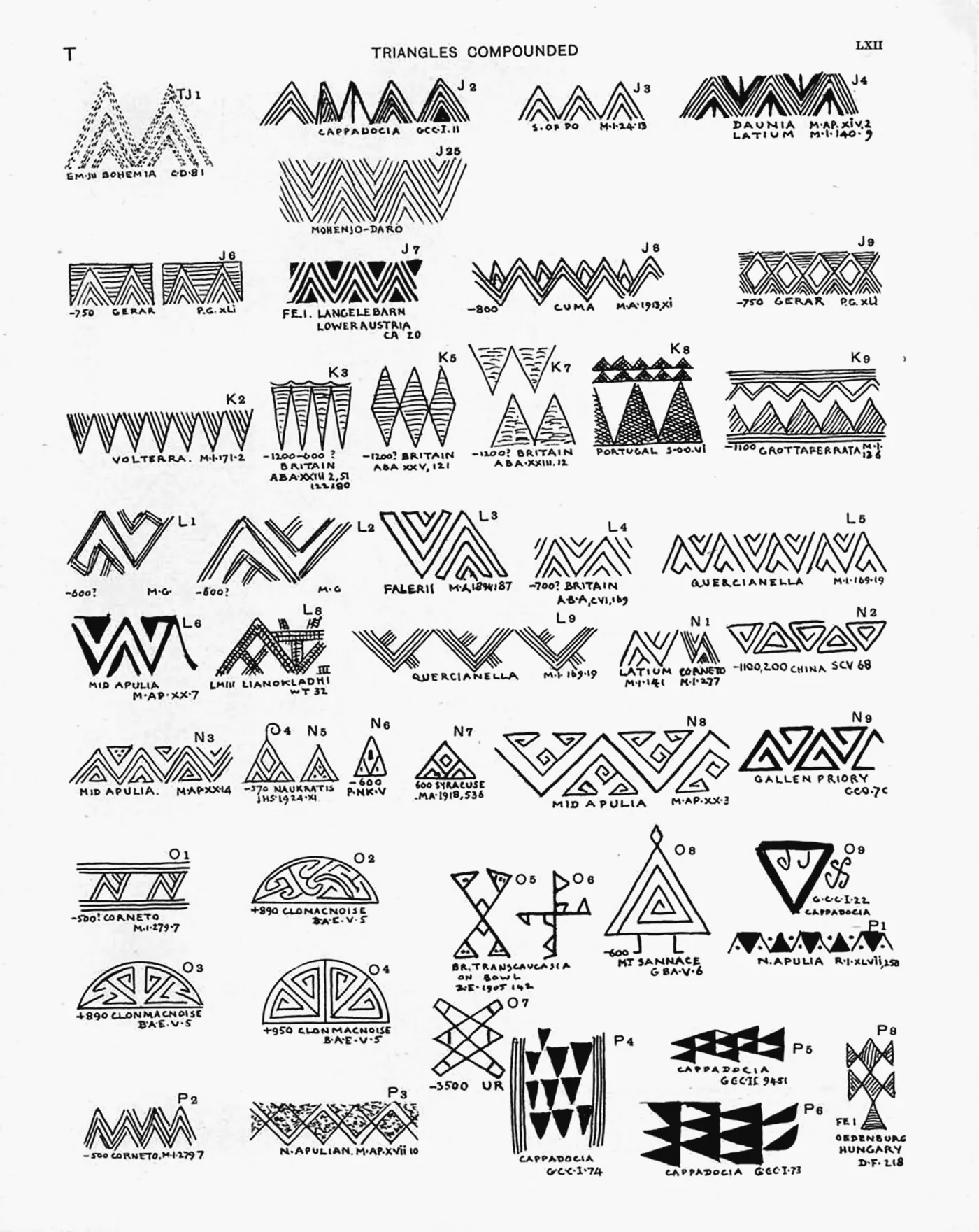
Plate LXII — Triangles Compounded Zoom
Plate LXII · Class T

Triangles Compounded

No note from Petrie. Where Pl. LXI grouped triangles side by side, this page compounds them — chevrons nested inside chevrons, zigzags doubled and trebled, and hatched triangles run together into continuous bands (TJ, K, L).

Lower down the forms turn angular and hooked: Apulian bands that fold into key-like spirals, three Irish half-round panels from Clonmacnoise of +890 and +950, and a closing group of solid black-and-white triangle chequers from Cappadocia.

Plate LXIII — Triangles Complex, Rhombs Zoom
Plate LXIII · Class T

Triangles Complex, Rhombs

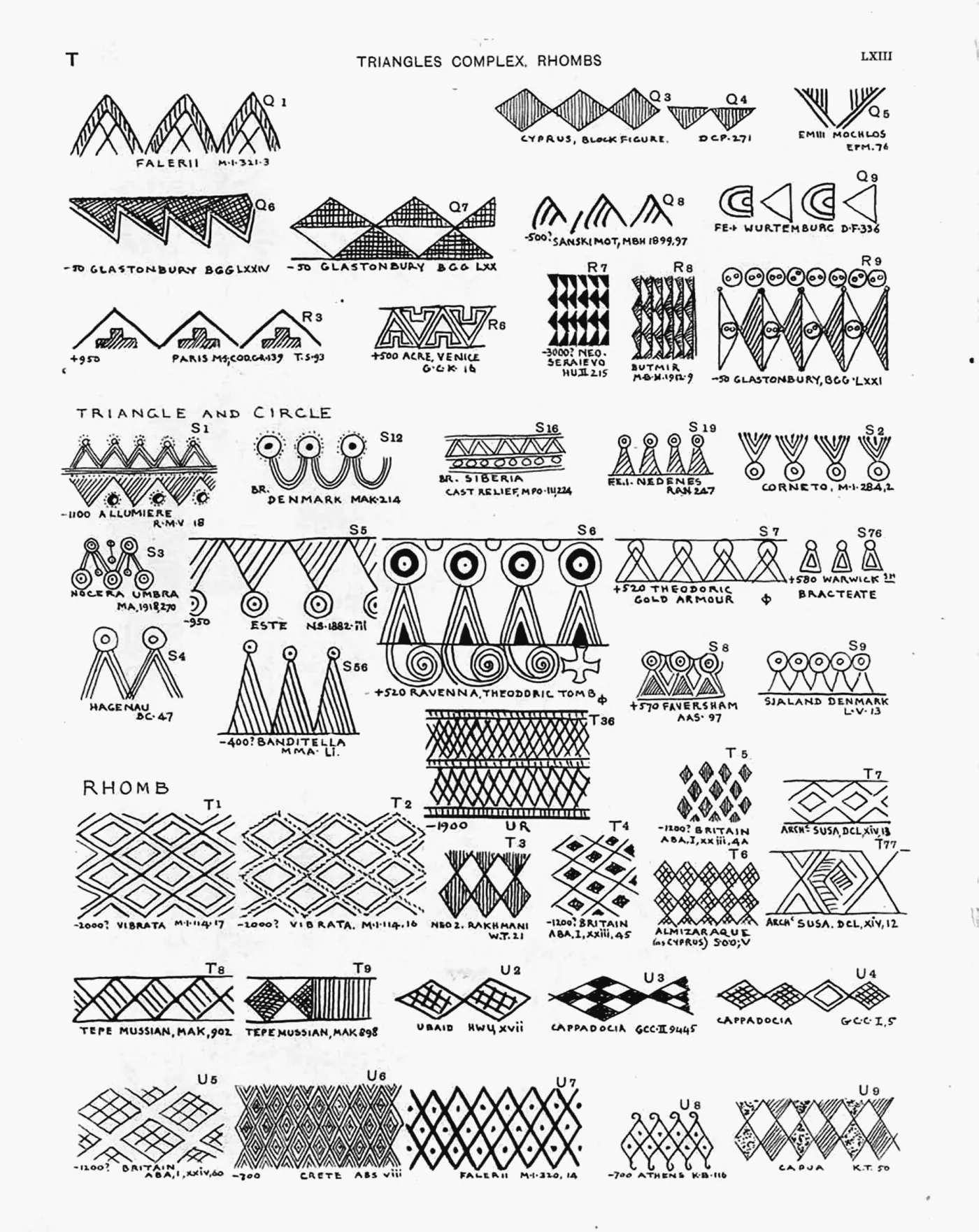
Petrie singles out the peculiar half rhombs, TR 7, 8, 9. On the last, from Glastonbury, the circles contain two small circles, as in late Celtic work elsewhere, and he suspects "some meaning may have been attached to the sign".

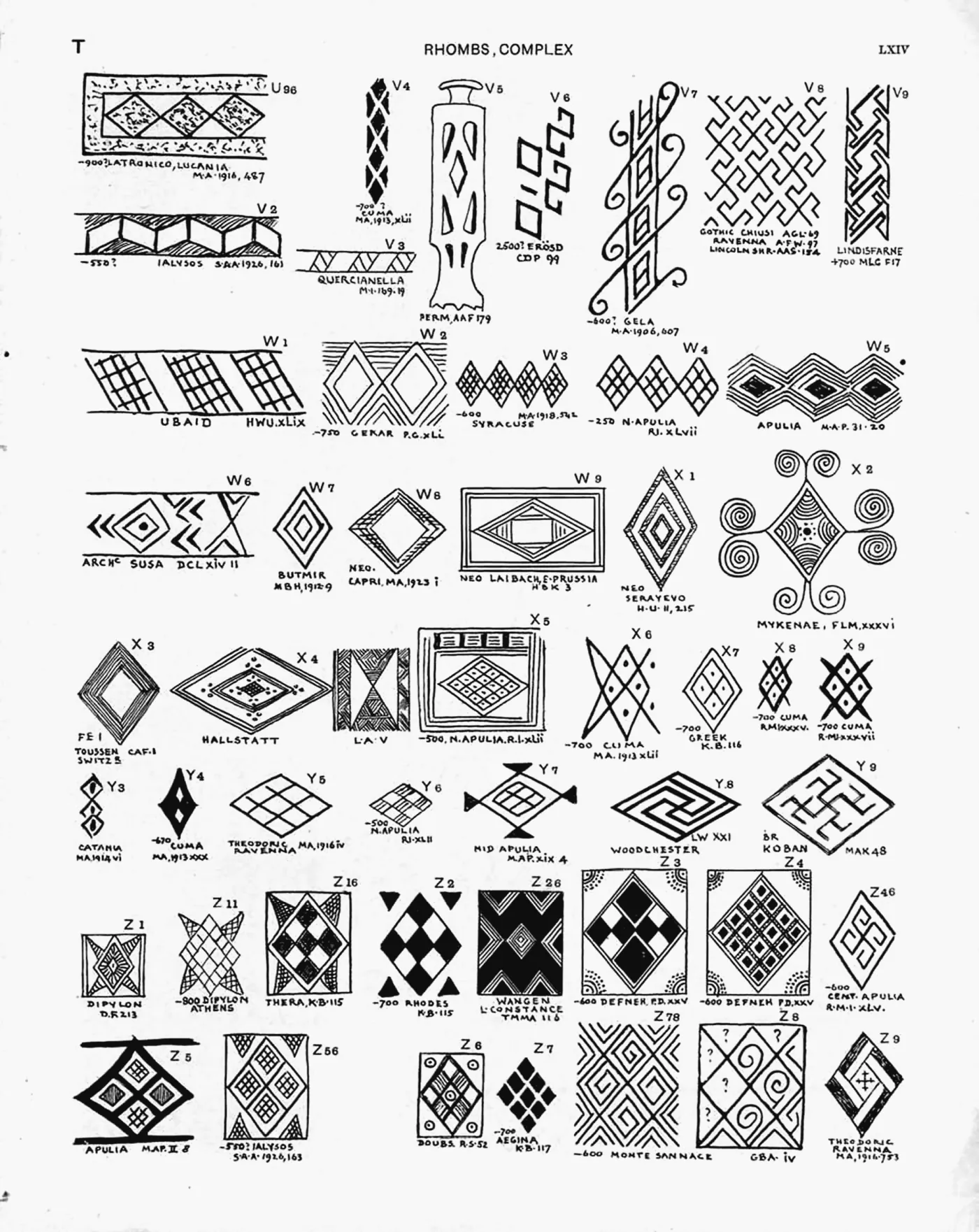
The triangle with a disc on its point is as early as -1100 (TS 1) and reappears at -400 (TS 56); the main example, on the tomb of Theodoric (TS 6), he calls too late to explain it. Subdivided rhombs were the favourite about -600 (TZ).

the triangle-with-a-disc runs across sixteen centuries and he admits outright that none of it gives him a clue.
Plate LXIV — Rhombs, Complex Zoom
Plate LXIV · Class T

Rhombs, Complex

No note heads this plate, but Petrie's Pl. LXIII note ends by pointing at the TZ group, which is printed here: the subdivided rhombs he calls the favourite type about -600, including the two chequered panels from Defneh.

Above them the page runs through lozenge friezes and lattices, a Mykenaean rhomb with spiral corners (X 2), plaited bands from Chiusi and Lindisfarne, and lozenges filled with key patterns from Woodchester and Koban.

Z 8 has five question marks inked straight into the drawing, where the compartments were past making out.