Decorative Patterns
Classes A–C · Plates I–VIII

Heroes, Sphinxes & Sea Monsters

Deities holding lions by the throat, sphinxes flanking a sacred tree, and an octopus that loses two arms every few centuries.

Plate I — Hero Subduing Lions or Bulls Zoom
Plate I · Class A

Hero Subduing Lions or Bulls

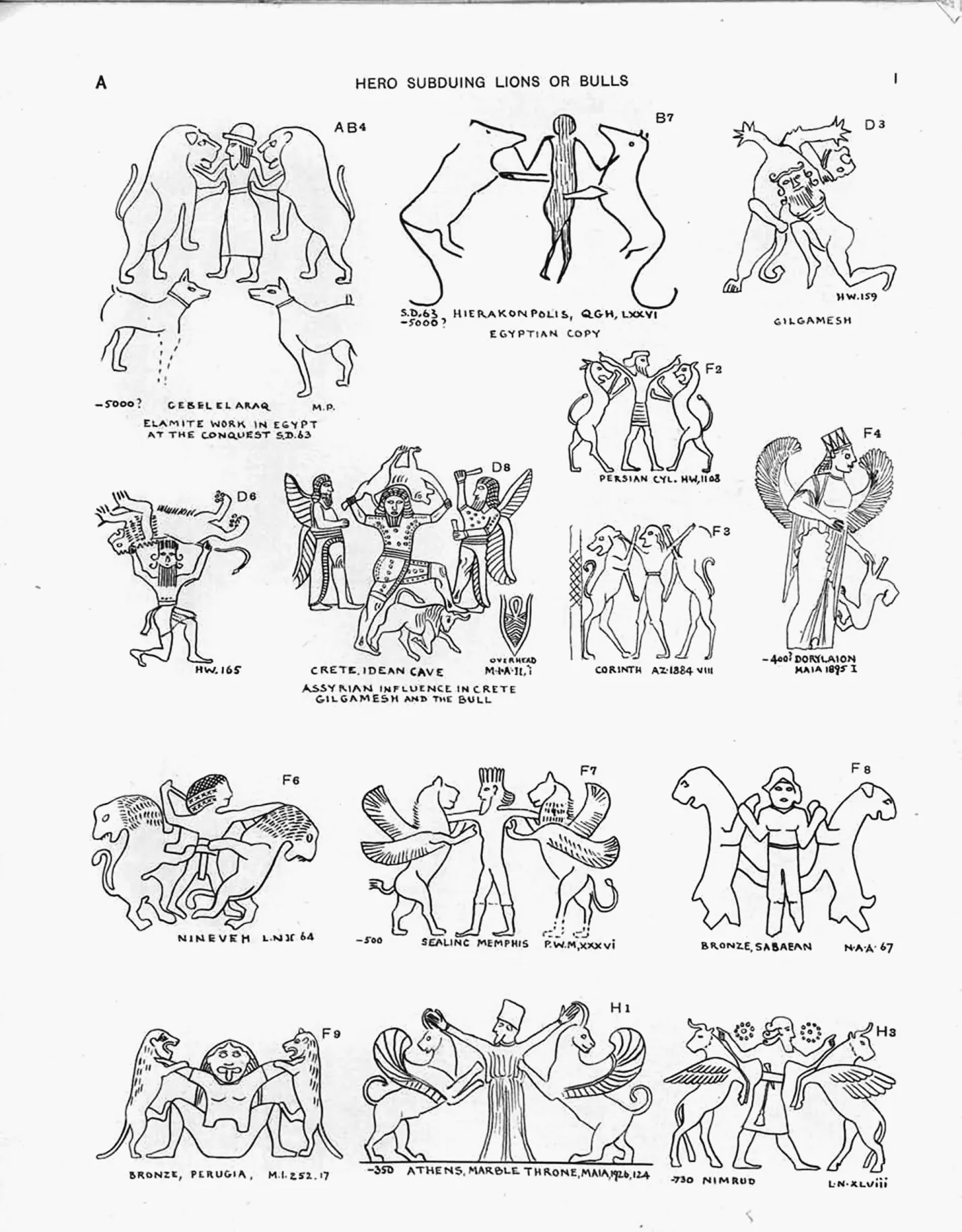
Petrie opens class A with a single idea: a controlling deity who dominates the strongest powers of Nature, represented by lions, bulls, or horses. He places the origin of the symbolism in Elam or Iraq, and says it travelled westward mainly through Assyrian influence. The Gilgamesh series, AD, is a special form of the same idea but was linked with the rest; two groups here are lettered Gilgamesh, and the Idean Cave group is captioned as Assyrian influence in Crete.

the top-left group is dated "-5000?" on the page. the question mark is doing a lot of quiet work.
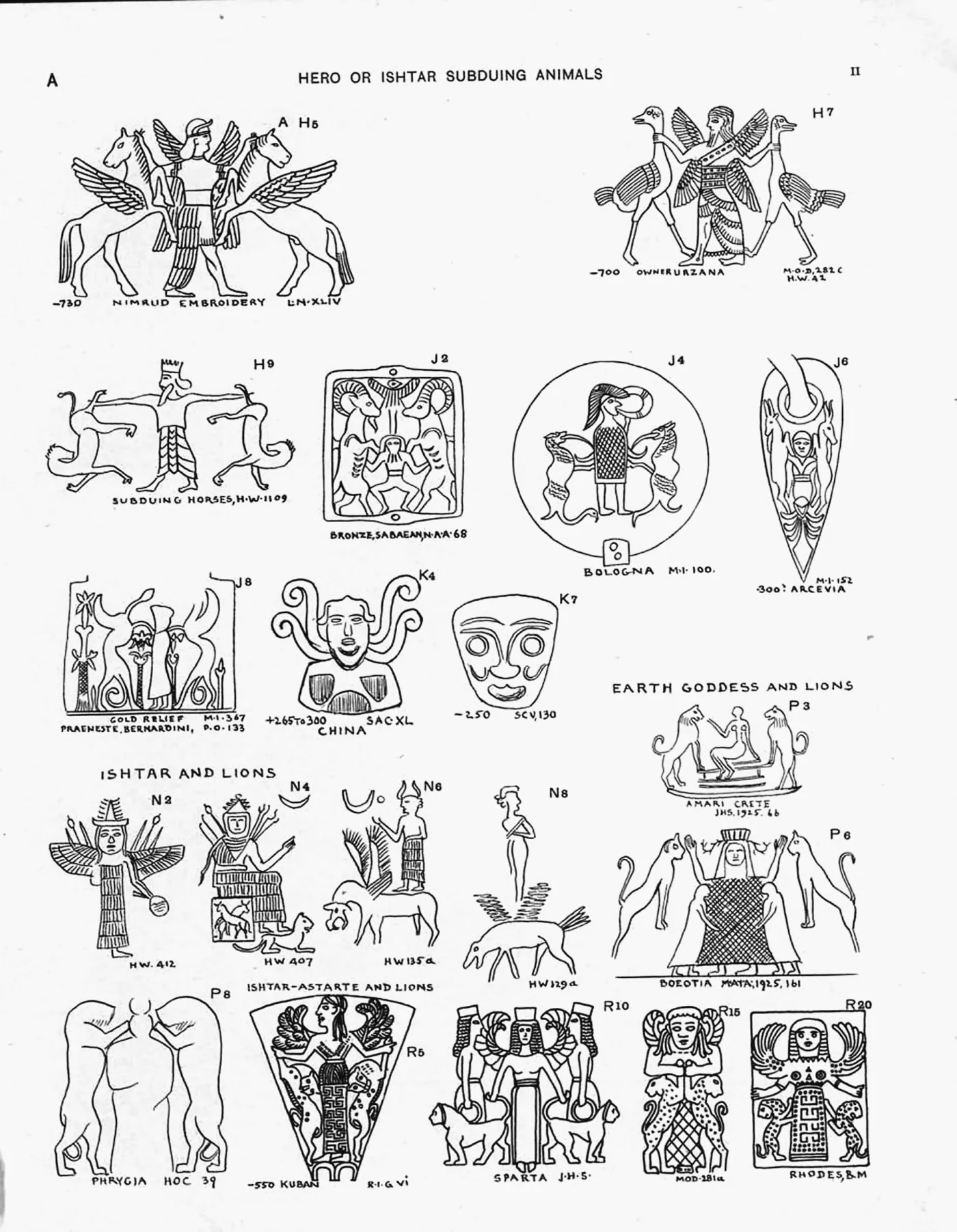
Plate II — Hero or Ishtar Subduing Animals Zoom
Plate II · Class A

Hero or Ishtar Subduing Animals

The same class, now female. Petrie's female type is Ishtar, AN, the crowned and winged figures grouped here under the hand-lettered heading Ishtar and Lions. She passes into Astarte, AR, and is mixed with the Mother type of Cybele, AP 8, the Phrygian piece at lower left, and with the Earth goddess, AP 3, 6, the Cretan and Boeotian panels. The male hero continues along the top rows, holding winged horses, bulls and long-necked birds.

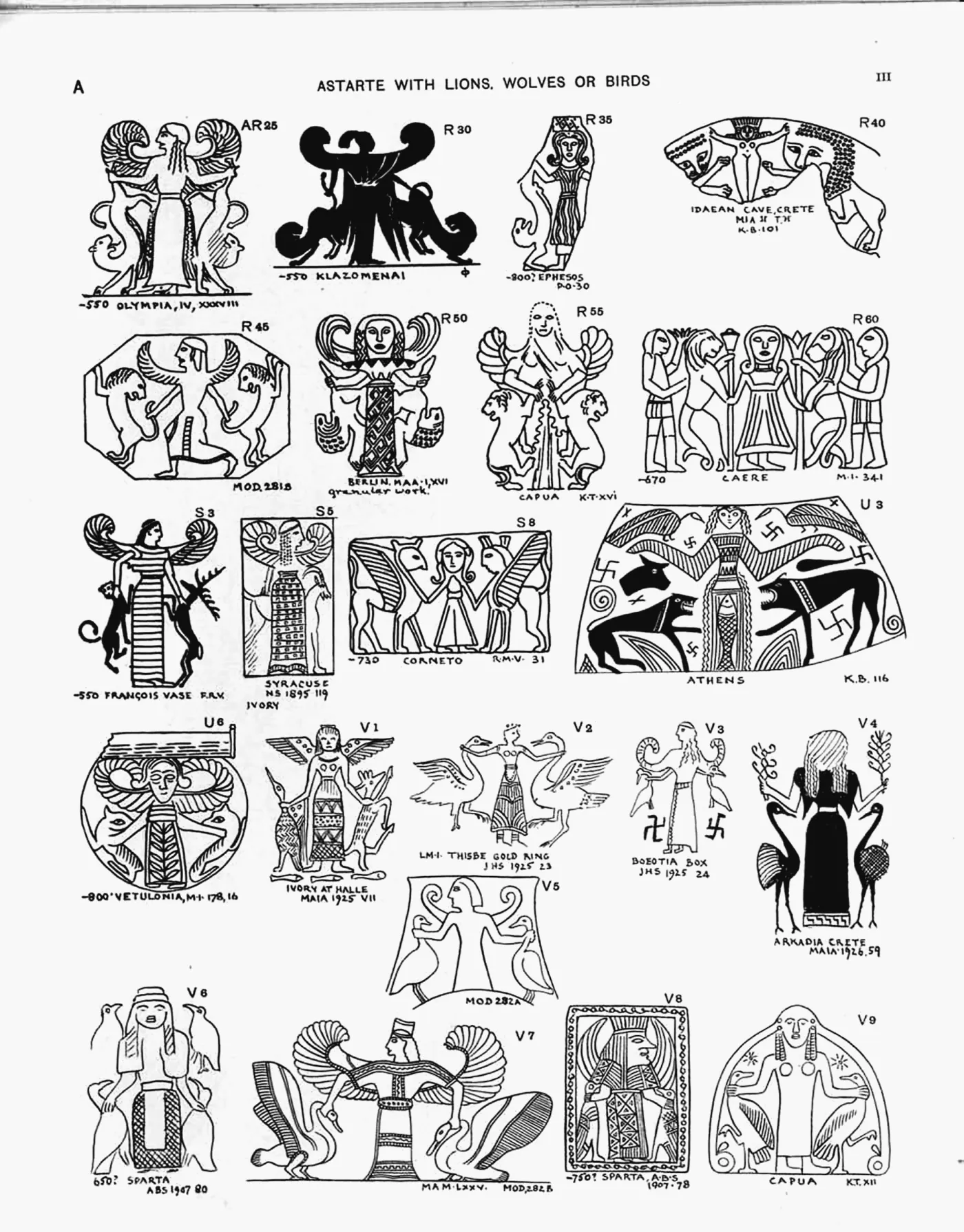
Plate III — Astarte with Lions, Wolves or Birds Zoom
Plate III · Class A

Astarte with Lions, Wolves or Birds

The western end of class A. Petrie writes that in the West the type passes into a deity dominating wolves, AU, or birds, AV, "the most intractable creatures." The wolves are the black-ground Athens fragment, U 3, set about with swastikas; the birds fill the lower half of the page, where a frontal figure holds a swan, goose or crane out at each side. Above, Astarte still stands between winged lions and sphinxes.

the proof of divine power, on the bottom two rows, is a woman calmly holding two large waterfowl at arm's length.
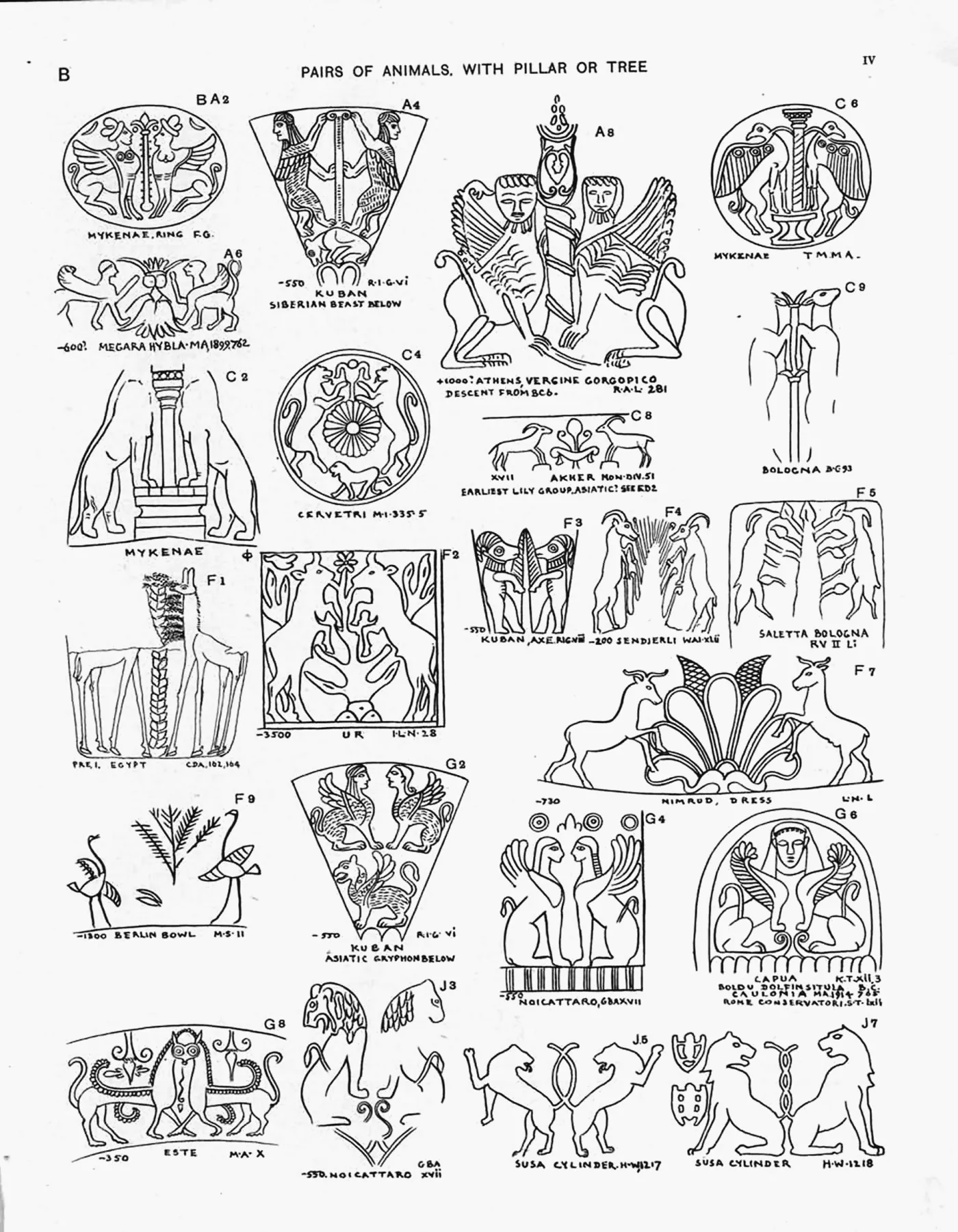
Plate IV — Pairs of Animals, With Pillar or Tree Zoom
Plate IV · Class B

Pairs of Animals, With Pillar or Tree

Class B drops the hero and keeps the animals. Petrie says the type of two sphinxes, or animals, with a middle column seems to start from Greece and was continued late there, BA 8, the big winged pair from Athens. With a middle tree it begins in Egypt, F 1, under Elamite influence, and is early in Iraq, BF 2, the Ur panel; from Asia it came into Egypt, BC 8. Pairs of lions without a pillar appear early in Elam, BJ, and sphinxes in the West, BG.

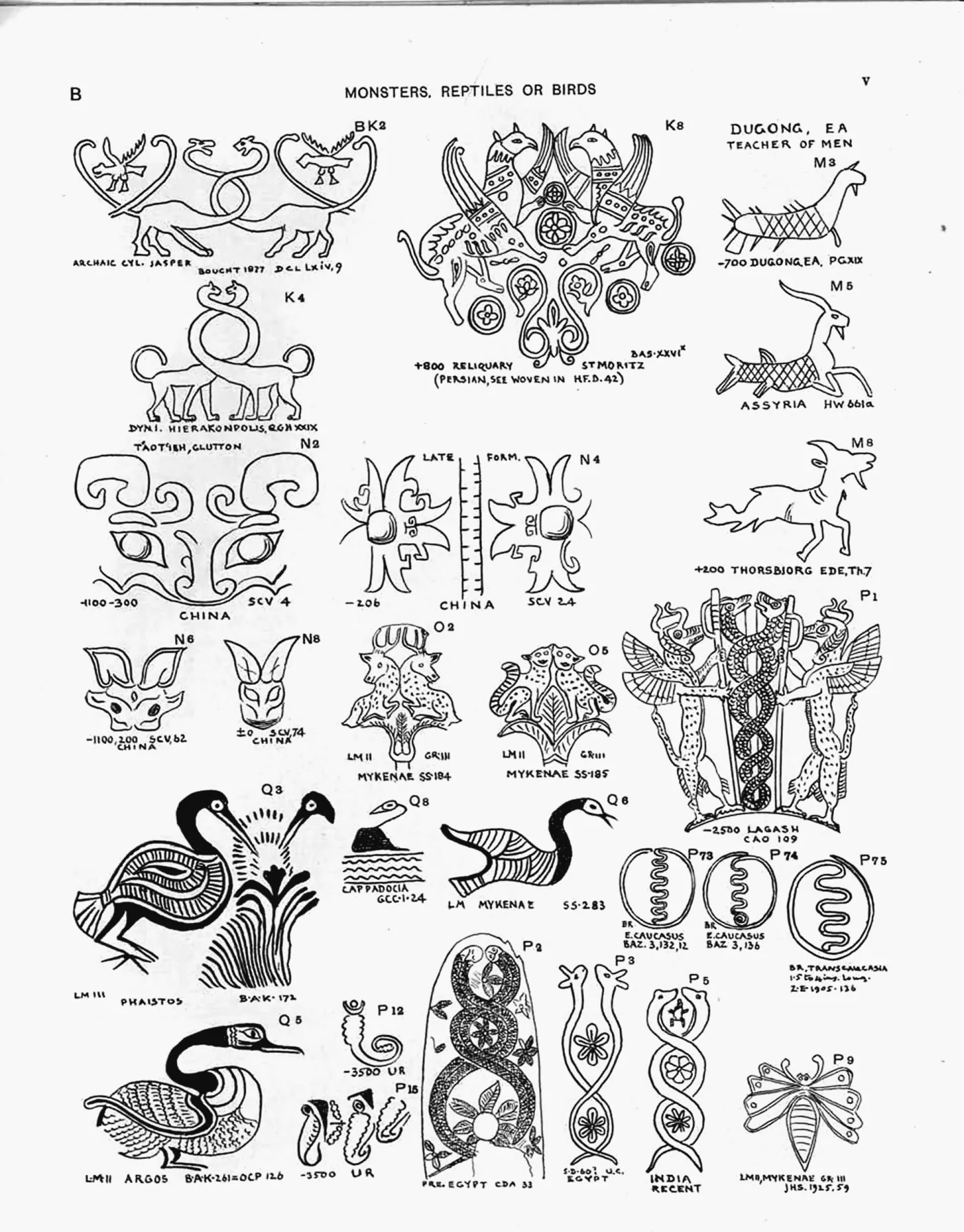
Plate V — Monsters, Reptiles or Birds Zoom
Plate V · Class B

Monsters, Reptiles or Birds

Petrie is certain that the two snake-headed monsters, BK 2 and 4, passed from Sumer to Egypt. The dugong, BM 3, was the figure of Ea, the god of wisdom who rose from the Persian Gulf; Assyria corrupted it, BM 5, and under Assyrian influence in the north it reached Denmark, M 8.

The Glutton head, BN 2, is the main figure in Chinese decoration, degrading until formalised as N 4. The twisted snakes begin in Egypt, BP 2, 3, and survive with rosettes in India, P 5.

the god of wisdom is a sea-cow, and petrie follows him from the persian gulf to denmark without blinking.
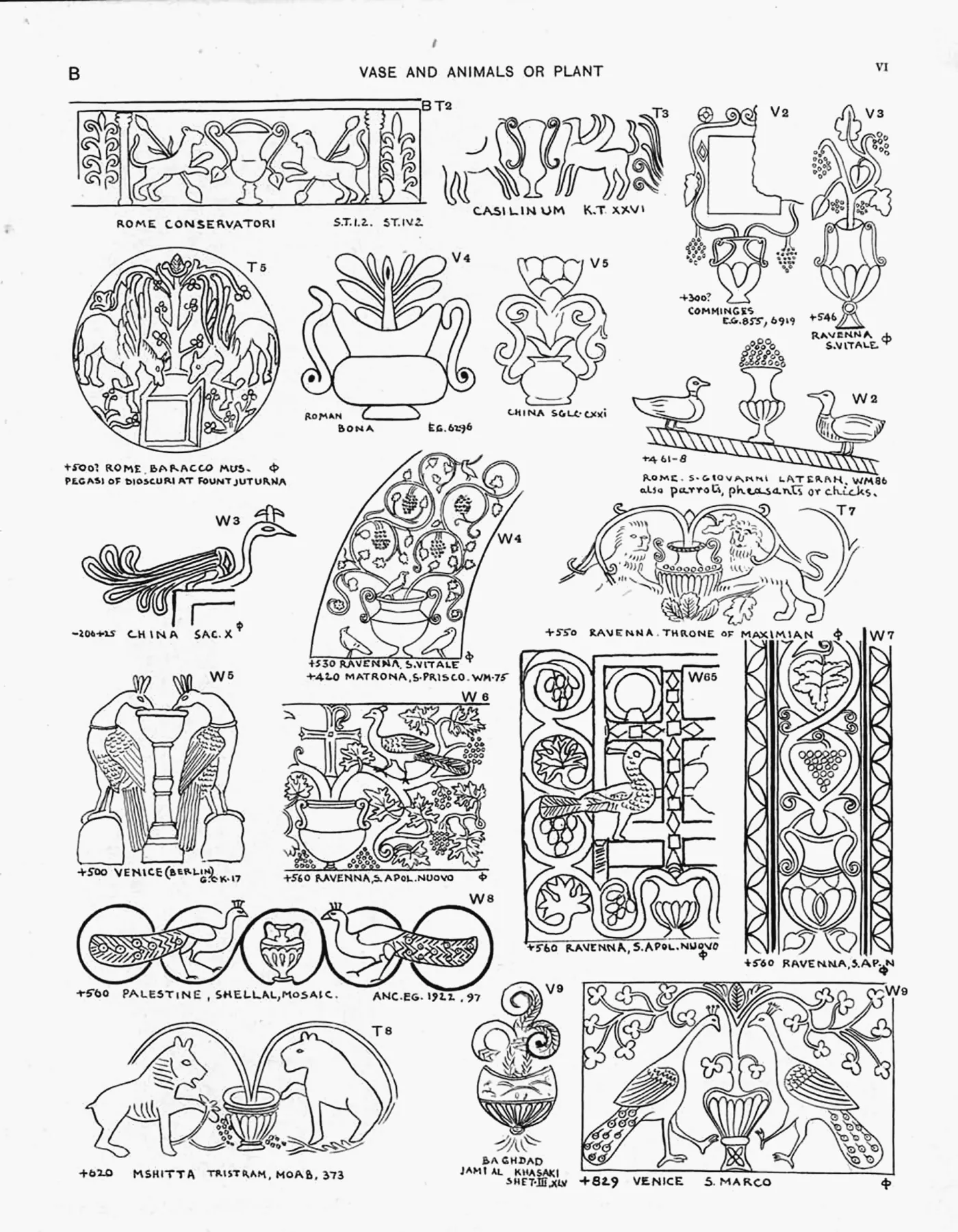
Plate VI — Vase and Animals or Plant Zoom
Plate VI · Class B

Vase and Animals or Plant

Petrie starts this type from a Bacchic group, BT 2, the Roman frieze across the top, and says a vase and plant became associated with it, V 2 to 5. Next a vase of fruit appears with birds of any kind, W 2 and 4. The peacock was placed in decoration in China before this age, W 3, and first appears in western sculpture on the porphyry sarcophagus of Constantia, A.D. 330; at 560 it became usually placed with the vase and plant.

Plate VII — Triquetra, Dragons, Marine Animals Zoom
Plate VII · Class C

Triquetra, Dragons, Marine Animals

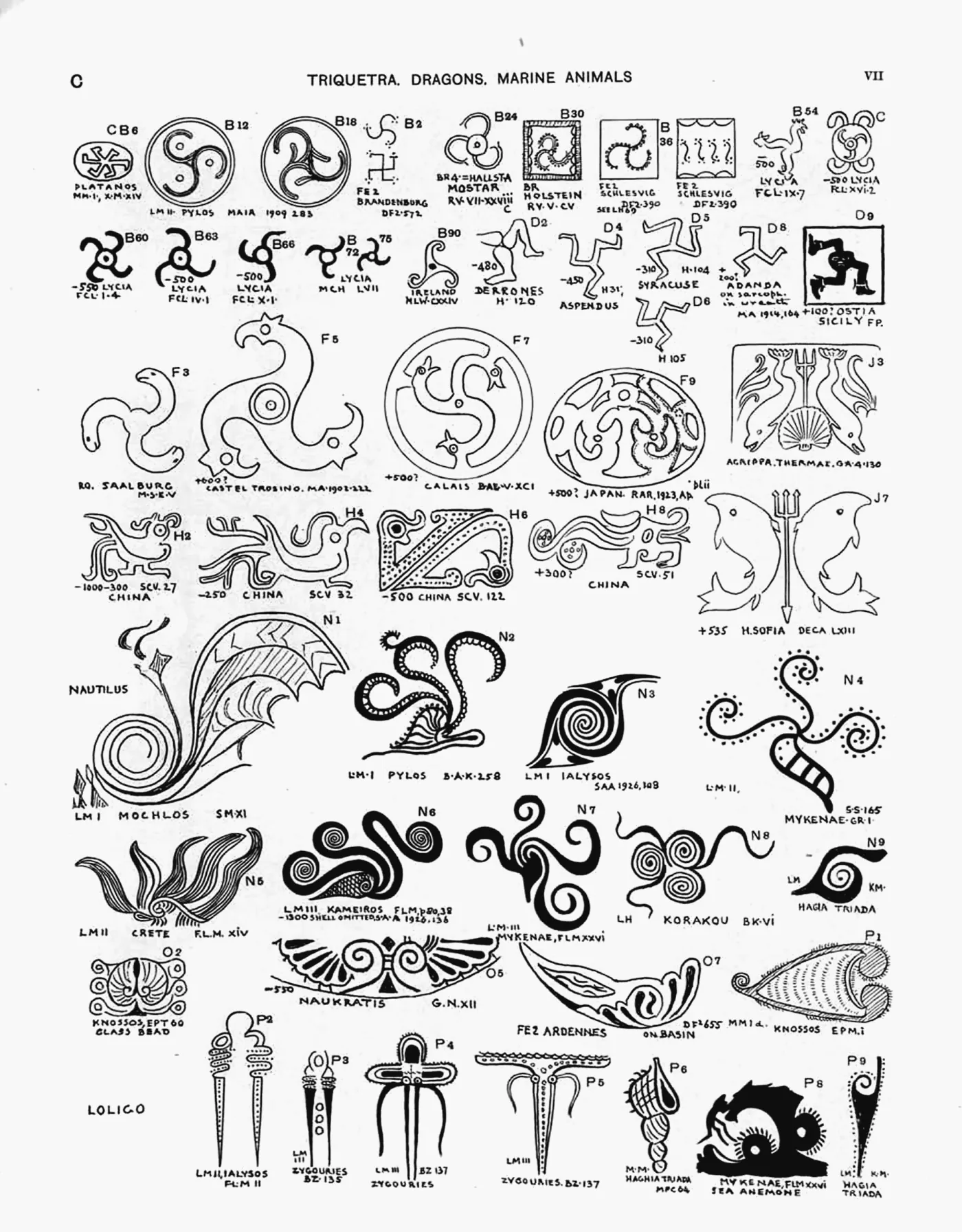
Three subjects on one page. The triskele appears first about -1500, CB 12; the plain geometrical form, CB 60-75, precedes its development as human legs, CD, and a Roman version develops the arms as dragons' heads, CF. Petrie thinks the Chinese dragon was copied from a bird about -1000, CH 2, that it passed under Norse influence, CH 6, and became denaturalised, CH 8. The Nautilus runs through stages from -1800, CN 2, its shell reduced and arms formal by -1300.

of the shapes along the bottom, petrie says only that various other marine animals are difficult to identify.
Plate VIII — Octopus Zoom
Plate VIII · Class C

Octopus

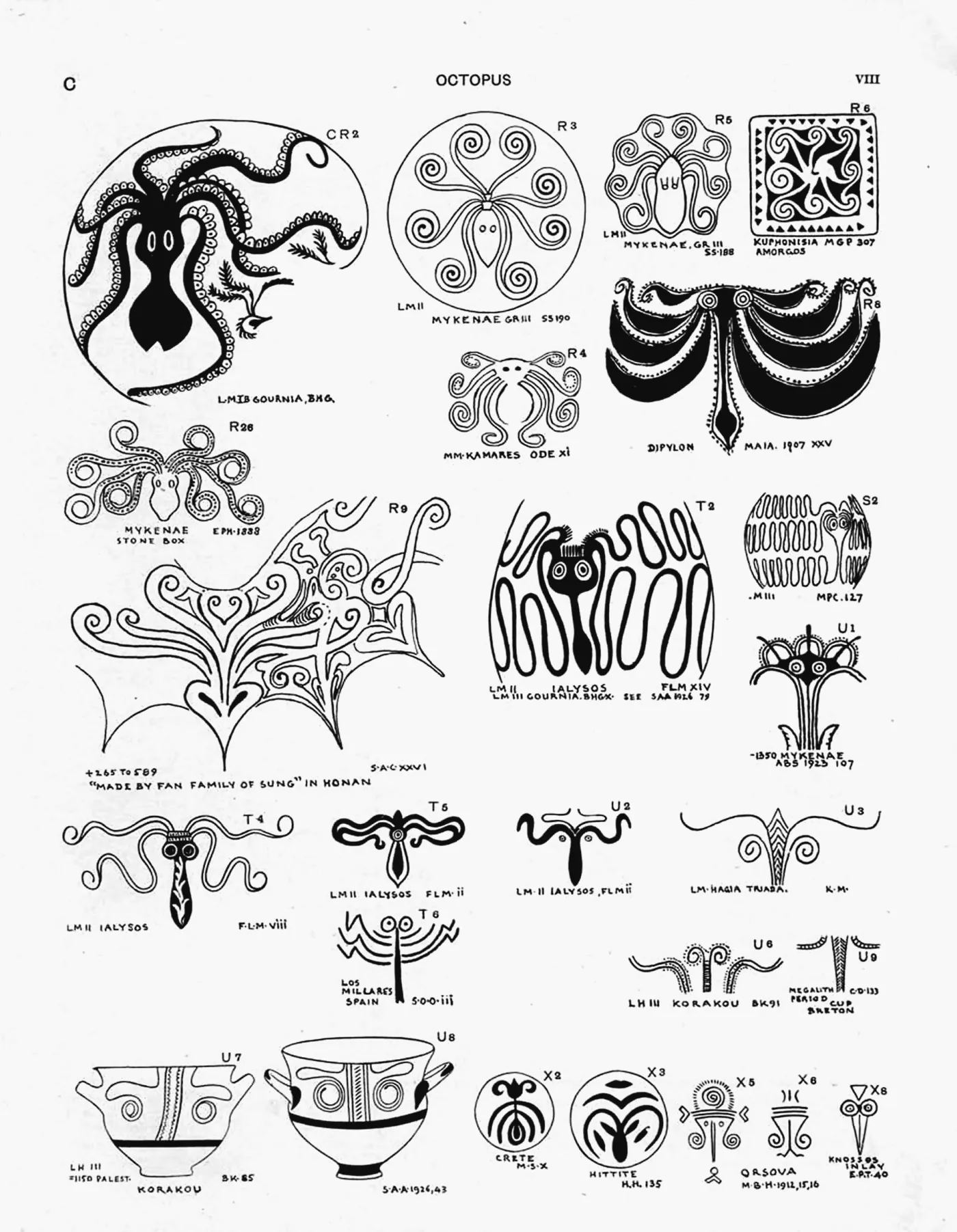
A whole plate of one animal, steadily losing arms. The naturalistic type, CR 2, of -1800 became regularised by -1600, CR 3, and formal soon after, CR 5. The eight-armed form was revived in the Dipylon ware, CR 8, and seems to have penetrated to the back of China, CR 9. A four-armed type arose about -1400, CT 2, 4, 5, then a two-armed one lasting to -1300. Petrie reads the export by that simplifying: Spain by -1500, Brittany perhaps -1200, CU 9.

dating a trade route by counting how many arms the octopus has left.